What if Your Next Gadget Was Designed to Never Be Thrown Away? Planet Friendly Designs: Gomi
What if Your Next Gadget Was Designed to Never Be Thrown Away? Planet Friendly Designs: Gomi
Author
Author
Özge Kayaaslan
Özge Kayaaslan

We’ve all experienced the planned obsolescence of modern electronics, from slowing smartphones to unfixable headphones, a cycle that feeds a growing global e-waste crisis. However, a company from Brighton, UK called Gomi offers a compelling case study in sustainable product design. Their model provides key insights into a more circular and resilient future for consumer technology.

Waste is Not an Endpoint, It's a Resource
Gomi's foundational principle is to design products using materials that are conventionally discarded. The company builds its speaker and power bank casings from post-consumer "non-recyclable" flexible plastics, intercepting them before they reach landfills or incinerators. This strategy extends to internal components, utilizing second-life lithium batteries from e-bikes and recycled magnets, thereby sidestepping the immense environmental and geopolitical costs associated with virgin material extraction.
This strategy redefines the concept of a supply chain, treating municipal waste streams not as an externality for disposal but as a primary source for high-value manufacturing. The results are measurable: Gomi’s wireless speakers have a 50.4% lower carbon footprint than similar products, moving their model from a compelling philosophy to a data-backed blueprint for systemic change.



Designing Against Disposable Culture
Gomi’s design philosophy directly counters the disposable culture prevalent in the tech industry by creating products that are "built to last." They achieve this through non-glued, modular designs. This approach is a critical departure from industry norms; by avoiding the permanent adhesives that major brands use to seal components and hinder disassembly, Gomi ensures that parts can be easily replaced and repaired, extending product life indefinitely. This commitment is not just a feature but a core service promise, as stated in their pledge to customers: If it breaks, we repair it. Nothing goes to waste. This "repairable for life" model is a radical subversion of the planned obsolescence that drives mainstream technology markets, where products are intentionally engineered for a limited lifespan to compel repeat purchases.

Proving Sustainability is Desirable
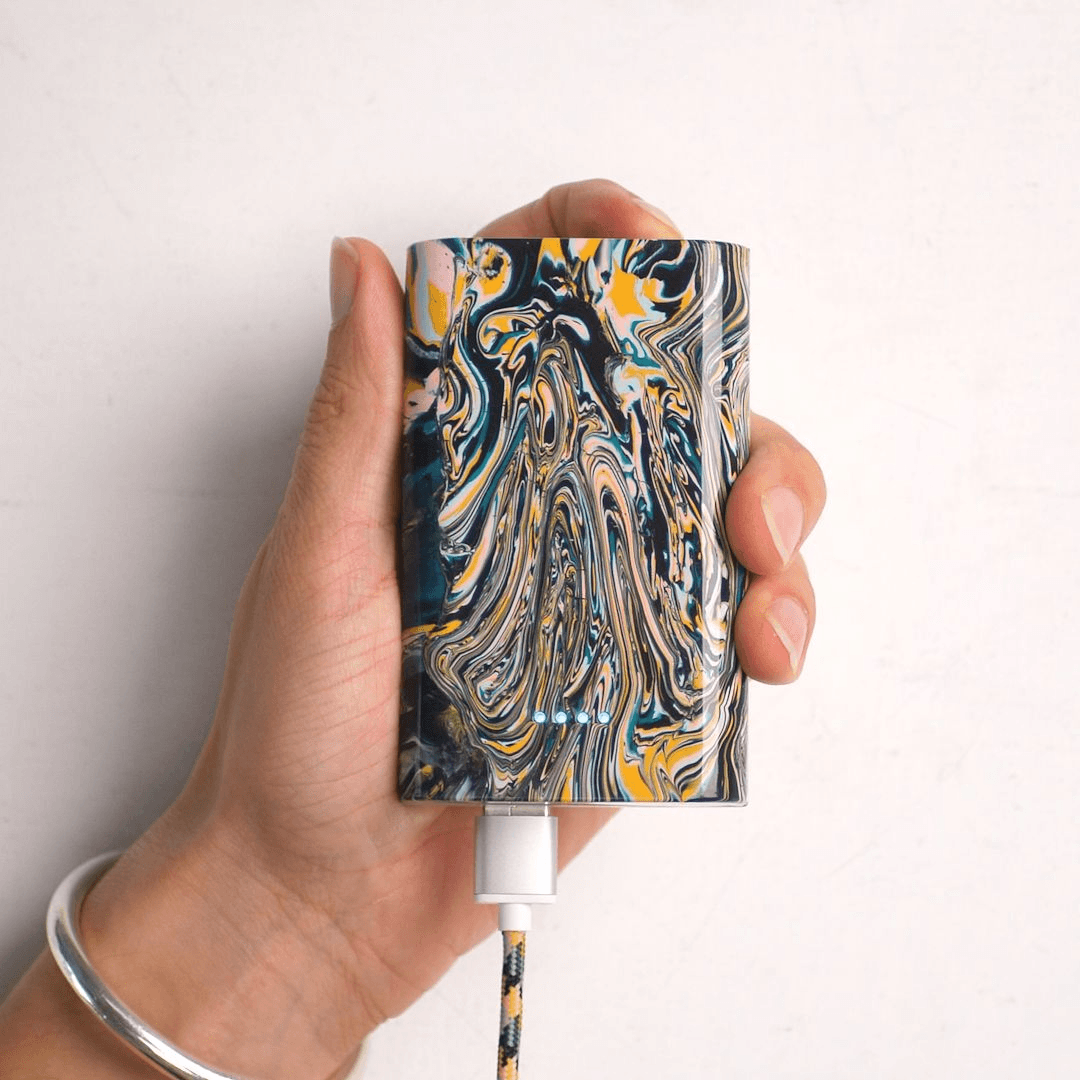
Gomi proves that sustainable design does not necessitate an aesthetic compromise. On the contrary, their products are instances where the manufacturing process itself dictates the aesthetic, turning the marbled texture of mixed recycled plastics into a signature design element. As a "small independent from Brighton, UK," the company leans into this, presenting its speakers, chargers, and power banks as colorful and uniquely handcrafted objects.
This strategy has been validated by the market. With over "10,000+ products" in use and "98% happy customers," Gomi demonstrates that consumers are actively seeking reliable, lasting electronics. This powerful social proof confirms that a business model built on circularity and longevity is not just an ethical imperative but a commercially potent strategy.

A New Philosophy for Tech
Gomi's model proves that material circularity, design for longevity, and market desirability are not competing priorities but a mutually reinforcing trifecta. By championing a system where products are designed for a lifetime of use and repair, the company offers a tangible alternative to the disposable culture that has become the default. Their approach reinforces their core slogans: "Buy less, but better" and "tech shouldn’t cost the earth."
It leaves us with a critical question: what will it take for this model of lifelong, repairable technology to become the norm rather than the exception?
We’ve all experienced the planned obsolescence of modern electronics, from slowing smartphones to unfixable headphones, a cycle that feeds a growing global e-waste crisis. However, a company from Brighton, UK called Gomi offers a compelling case study in sustainable product design. Their model provides key insights into a more circular and resilient future for consumer technology.
Waste is Not an Endpoint, It's a Resource
Gomi's foundational principle is to design products using materials that are conventionally discarded. The company builds its speaker and power bank casings from post-consumer "non-recyclable" flexible plastics, intercepting them before they reach landfills or incinerators. This strategy extends to internal components, utilizing second-life lithium batteries from e-bikes and recycled magnets, thereby sidestepping the immense environmental and geopolitical costs associated with virgin material extraction.
This strategy redefines the concept of a supply chain, treating municipal waste streams not as an externality for disposal but as a primary source for high-value manufacturing. The results are measurable: Gomi’s wireless speakers have a 50.4% lower carbon footprint than similar products, moving their model from a compelling philosophy to a data-backed blueprint for systemic change.
Designing Against Disposable Culture
Gomi’s design philosophy directly counters the disposable culture prevalent in the tech industry by creating products that are "built to last." They achieve this through non-glued, modular designs. This approach is a critical departure from industry norms; by avoiding the permanent adhesives that major brands use to seal components and hinder disassembly, Gomi ensures that parts can be easily replaced and repaired, extending product life indefinitely. This commitment is not just a feature but a core service promise, as stated in their pledge to customers: If it breaks, we repair it. Nothing goes to waste. This "repairable for life" model is a radical subversion of the planned obsolescence that drives mainstream technology markets, where products are intentionally engineered for a limited lifespan to compel repeat purchases.
Proving Sustainability is Desirable
Gomi proves that sustainable design does not necessitate an aesthetic compromise. On the contrary, their products are instances where the manufacturing process itself dictates the aesthetic, turning the marbled texture of mixed recycled plastics into a signature design element. As a "small independent from Brighton, UK," the company leans into this, presenting its speakers, chargers, and power banks as colorful and uniquely handcrafted objects.
This strategy has been validated by the market. With over "10,000+ products" in use and "98% happy customers," Gomi demonstrates that consumers are actively seeking reliable, lasting electronics. This powerful social proof confirms that a business model built on circularity and longevity is not just an ethical imperative but a commercially potent strategy.
A New Philosophy for Tech
Gomi's model proves that material circularity, design for longevity, and market desirability are not competing priorities but a mutually reinforcing trifecta. By championing a system where products are designed for a lifetime of use and repair, the company offers a tangible alternative to the disposable culture that has become the default. Their approach reinforces their core slogans: "Buy less, but better" and "tech shouldn’t cost the earth."
It leaves us with a critical question: what will it take for this model of lifelong, repairable technology to become the norm rather than the exception?
We’ve all experienced the planned obsolescence of modern electronics, from slowing smartphones to unfixable headphones, a cycle that feeds a growing global e-waste crisis. However, a company from Brighton, UK called Gomi offers a compelling case study in sustainable product design. Their model provides key insights into a more circular and resilient future for consumer technology.
Waste is Not an Endpoint, It's a Resource
Gomi's foundational principle is to design products using materials that are conventionally discarded. The company builds its speaker and power bank casings from post-consumer "non-recyclable" flexible plastics, intercepting them before they reach landfills or incinerators. This strategy extends to internal components, utilizing second-life lithium batteries from e-bikes and recycled magnets, thereby sidestepping the immense environmental and geopolitical costs associated with virgin material extraction.
This strategy redefines the concept of a supply chain, treating municipal waste streams not as an externality for disposal but as a primary source for high-value manufacturing. The results are measurable: Gomi’s wireless speakers have a 50.4% lower carbon footprint than similar products, moving their model from a compelling philosophy to a data-backed blueprint for systemic change.
Designing Against Disposable Culture
Gomi’s design philosophy directly counters the disposable culture prevalent in the tech industry by creating products that are "built to last." They achieve this through non-glued, modular designs. This approach is a critical departure from industry norms; by avoiding the permanent adhesives that major brands use to seal components and hinder disassembly, Gomi ensures that parts can be easily replaced and repaired, extending product life indefinitely. This commitment is not just a feature but a core service promise, as stated in their pledge to customers: If it breaks, we repair it. Nothing goes to waste. This "repairable for life" model is a radical subversion of the planned obsolescence that drives mainstream technology markets, where products are intentionally engineered for a limited lifespan to compel repeat purchases.
Proving Sustainability is Desirable
Gomi proves that sustainable design does not necessitate an aesthetic compromise. On the contrary, their products are instances where the manufacturing process itself dictates the aesthetic, turning the marbled texture of mixed recycled plastics into a signature design element. As a "small independent from Brighton, UK," the company leans into this, presenting its speakers, chargers, and power banks as colorful and uniquely handcrafted objects.
This strategy has been validated by the market. With over "10,000+ products" in use and "98% happy customers," Gomi demonstrates that consumers are actively seeking reliable, lasting electronics. This powerful social proof confirms that a business model built on circularity and longevity is not just an ethical imperative but a commercially potent strategy.
A New Philosophy for Tech
Gomi's model proves that material circularity, design for longevity, and market desirability are not competing priorities but a mutually reinforcing trifecta. By championing a system where products are designed for a lifetime of use and repair, the company offers a tangible alternative to the disposable culture that has become the default. Their approach reinforces their core slogans: "Buy less, but better" and "tech shouldn’t cost the earth."
It leaves us with a critical question: what will it take for this model of lifelong, repairable technology to become the norm rather than the exception?