Dyson CameraJet Toothbrush: What Happened Two Weeks After Launch?
Dyson CameraJet Toothbrush: What Happened Two Weeks After Launch?
Author
Author
Doğa Güveren
Doğa Güveren
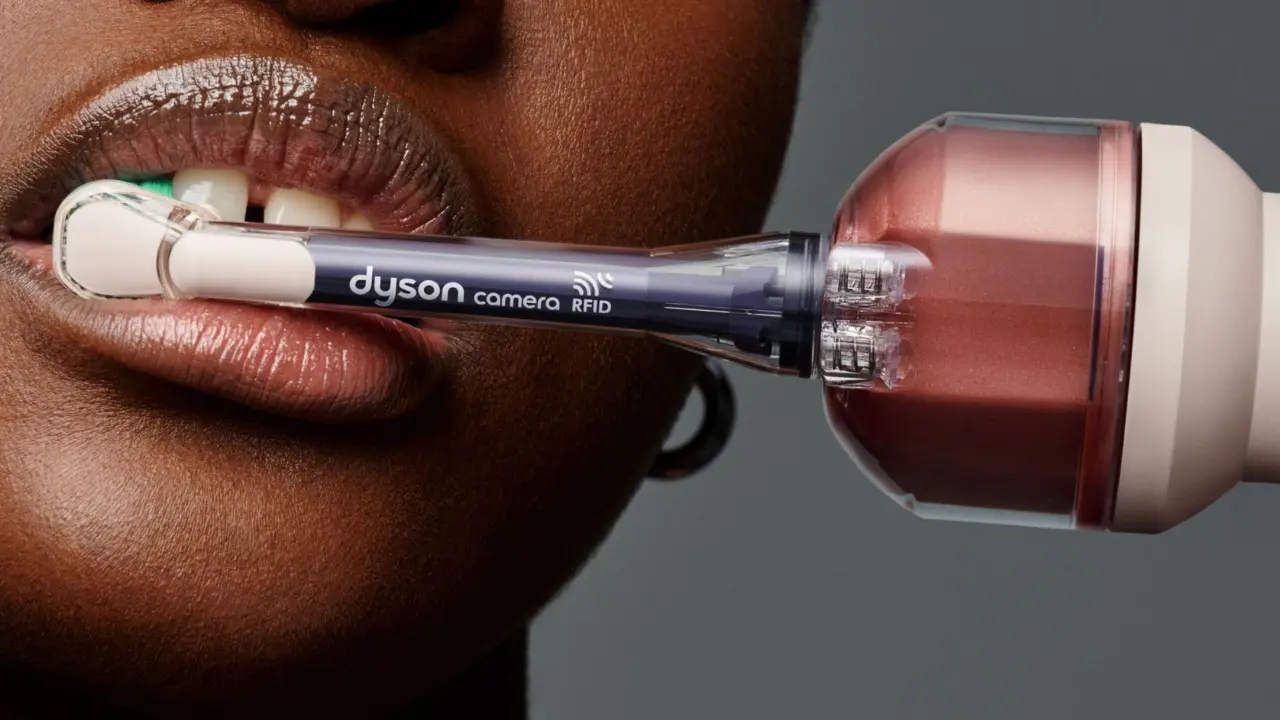
Dyson launched CameraJet on 1 September with a camera, machine learning and a precision liquid jet built into a single toothbrush. Within two weeks, it had disappeared from sale across several markets. Dyson has since confirmed that one production batch of jet tubes had a process issue that could allow water seepage, and says isolating the affected products led to a temporary out-of-stock position.
For a product that spent six years in development, it is a striking start. But the more interesting story is not simply what went wrong. It is what CameraJet says about Dyson’s approach to designing an everyday object.

What Was Dyson Trying to Solve?
The idea behind CameraJet is easy to understand. Brushing is already part of most daily routines, while cleaning between the teeth is often treated as a separate step. Dyson wanted to bring the two together, using a camera to locate gaps and automatically direct a jet of mouth rinse between them while brushing.
It is a genuine problem with a clear design goal: Make more complete cleaning easier to fit into an existing habit.
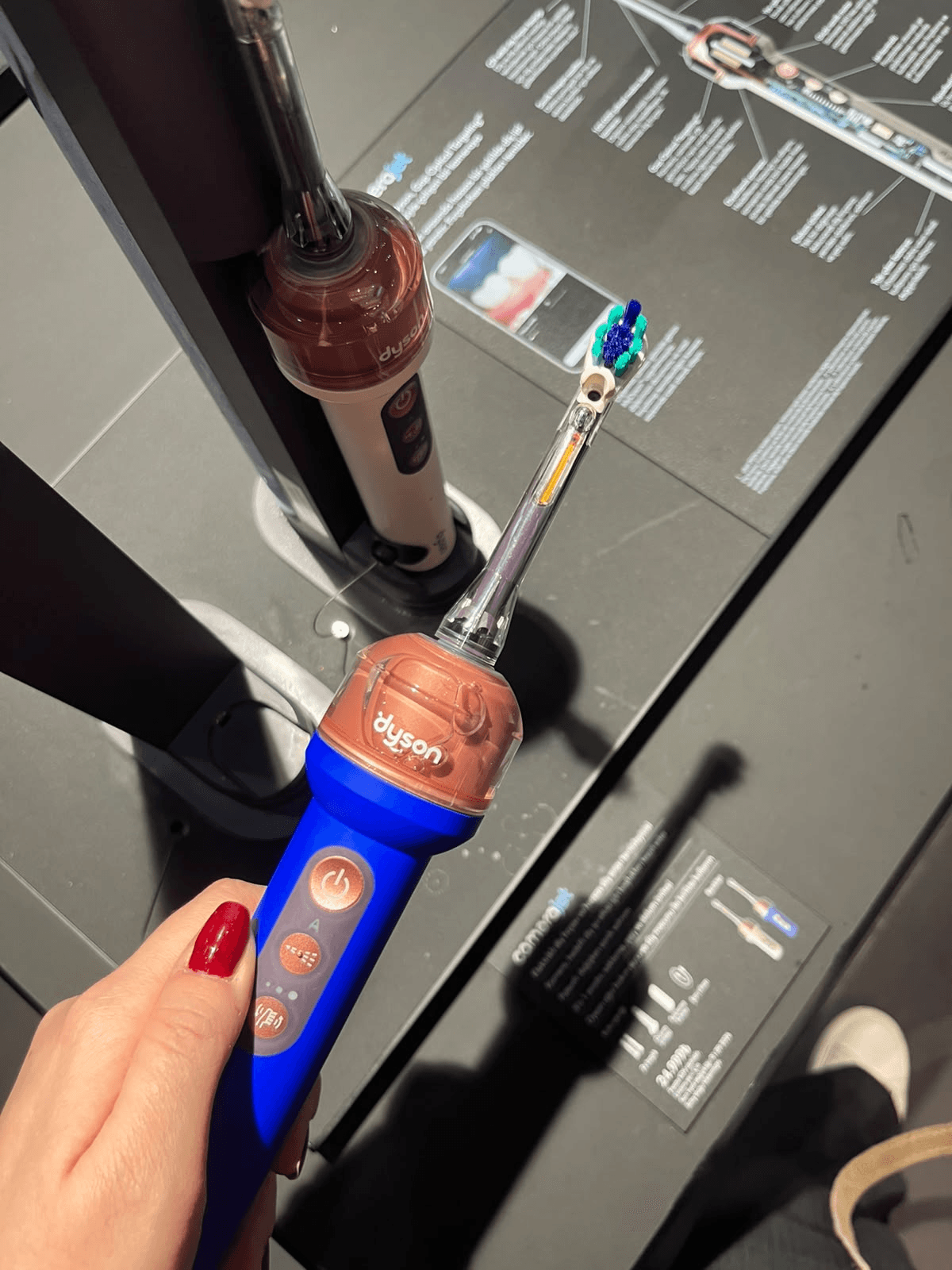
Seen in person, though, CameraJet already feels quite different from the toothbrush we know. The brush itself is substantial, and the dock takes up far more space than expected for something built around a short daily routine. That physical scale is the first hint that a simple habit now comes with a much larger system around it. Even with a dedicated travel case, it is hard not to wonder how practical that system really feels on the move. For something we usually throw into a bag without a second thought, CameraJet asks for noticeably more space, making portability feel less effortless than we expect from a toothbrush.
Six Years of Engineering in Your Bathroom
Six years, 661 engineers, 38 patents filed, around 16 million lines of code and more than 470,000 dental images sit behind CameraJet. Its 100k-pixel macro camera analyses 28 images every second, using machine learning to identify the gaps that trigger the jet.
The numbers are impressive. This is also where the design becomes more interesting.
The automatic jet makes a sudden mechanical sound before releasing liquid, which is quite different from what we expect from an electric toothbrush. On first encounter, that sound creates a small moment of hesitation: is this really what the product is supposed to sound like, or has something gone wrong? It also makes you question the interaction itself. If a new feature feels uncertain before it feels useful, how convincing is the design in practice?

The camera creates another pause. Having one inside the mouth already feels unusual, even if Dyson says it is only active during live viewing or auto-jetting. The fact that some users have even pointed it outward to capture scenes beyond the bathroom makes the feature feel even more unexpected. In everyday use, though, the camera still needs a clear view, which means pace, positioning and low-foaming toothpaste all matter. The MyDyson app adds live viewing, guidance and cleaning feedback, turning a familiar toothbrush into something that asks for a little more attention.
The technology makes sense on paper; experiencing it is another matter. CameraJet was designed to remove a step from oral care, but in doing so it may have introduced several new ones.

This is where the balance begins to feel less certain. The problem is not that CameraJet contains too much technology. Dyson has built its reputation on putting serious engineering into ordinary objects. The difference is that, at its best, that complexity disappears behind the experience. With CameraJet, some of it reaches the user.
The launch problems made that tension harder to ignore. Reports of failures and water around the battery area appeared soon after release. Dyson later said a production issue affecting one batch of jet tubes created the potential for water seepage, and that the affected products had been isolated.

£420 for Less Effort or More?
At £419.99, CameraJet asks for more than curiosity. It asks buyers to trust the engineering, learn a new interaction and believe that the added technology will make a familiar routine better.
Dyson has earned that kind of trust before. The brand has built its reputation on making people reconsider everyday objects they thought were already solved. CameraJet may eventually do the same for oral care. But with the product disappearing from sale across several markets shortly after launch, and no formal recall announced, this first version still feels like a product finding its footing in the real world.

So would we rush to buy it now? Probably not. At this price, the question is not whether the technology is impressive, but whether the experience feels complete enough to justify it. CameraJet solves a real problem and introduces genuinely interesting ideas, but it also shows how easily simplicity can turn into extra effort.

For designers, that may be the most useful part of the story. The challenge is not how much technology we can add to an everyday object, but how much of that complexity we can make disappear.
Dyson launched CameraJet on 1 September with a camera, machine learning and a precision liquid jet built into a single toothbrush. Within two weeks, it had disappeared from sale across several markets. Dyson has since confirmed that one production batch of jet tubes had a process issue that could allow water seepage, and says isolating the affected products led to a temporary out-of-stock position.
For a product that spent six years in development, it is a striking start. But the more interesting story is not simply what went wrong. It is what CameraJet says about Dyson’s approach to designing an everyday object.
What Was Dyson Trying to Solve?
The idea behind CameraJet is easy to understand. Brushing is already part of most daily routines, while cleaning between the teeth is often treated as a separate step. Dyson wanted to bring the two together, using a camera to locate gaps and automatically direct a jet of mouth rinse between them while brushing.
It is a genuine problem with a clear design goal: Make more complete cleaning easier to fit into an existing habit.
Seen in person, though, CameraJet already feels quite different from the toothbrush we know. The brush itself is substantial, and the dock takes up far more space than expected for something built around a short daily routine. That physical scale is the first hint that a simple habit now comes with a much larger system around it. Even with a dedicated travel case, it is hard not to wonder how practical that system really feels on the move. For something we usually throw into a bag without a second thought, CameraJet asks for noticeably more space, making portability feel less effortless than we expect from a toothbrush.
Six Years of Engineering in Your Bathroom
Six years, 661 engineers, 38 patents filed, around 16 million lines of code and more than 470,000 dental images sit behind CameraJet. Its 100k-pixel macro camera analyses 28 images every second, using machine learning to identify the gaps that trigger the jet.
The numbers are impressive. This is also where the design becomes more interesting.
The automatic jet makes a sudden mechanical sound before releasing liquid, which is quite different from what we expect from an electric toothbrush. On first encounter, that sound creates a small moment of hesitation: is this really what the product is supposed to sound like, or has something gone wrong? It also makes you question the interaction itself. If a new feature feels uncertain before it feels useful, how convincing is the design in practice?
The camera creates another pause. Having one inside the mouth already feels unusual, even if Dyson says it is only active during live viewing or auto-jetting. The fact that some users have even pointed it outward to capture scenes beyond the bathroom makes the feature feel even more unexpected. In everyday use, though, the camera still needs a clear view, which means pace, positioning and low-foaming toothpaste all matter. The MyDyson app adds live viewing, guidance and cleaning feedback, turning a familiar toothbrush into something that asks for a little more attention.
The technology makes sense on paper; experiencing it is another matter. CameraJet was designed to remove a step from oral care, but in doing so it may have introduced several new ones.
This is where the balance begins to feel less certain. The problem is not that CameraJet contains too much technology. Dyson has built its reputation on putting serious engineering into ordinary objects. The difference is that, at its best, that complexity disappears behind the experience. With CameraJet, some of it reaches the user.
The launch problems made that tension harder to ignore. Reports of failures and water around the battery area appeared soon after release. Dyson later said a production issue affecting one batch of jet tubes created the potential for water seepage, and that the affected products had been isolated.
£420 for Less Effort or More?
At £419.99, CameraJet asks for more than curiosity. It asks buyers to trust the engineering, learn a new interaction and believe that the added technology will make a familiar routine better.
Dyson has earned that kind of trust before. The brand has built its reputation on making people reconsider everyday objects they thought were already solved. CameraJet may eventually do the same for oral care. But with the product disappearing from sale across several markets shortly after launch, and no formal recall announced, this first version still feels like a product finding its footing in the real world.
So would we rush to buy it now? Probably not. At this price, the question is not whether the technology is impressive, but whether the experience feels complete enough to justify it. CameraJet solves a real problem and introduces genuinely interesting ideas, but it also shows how easily simplicity can turn into extra effort.
For designers, that may be the most useful part of the story. The challenge is not how much technology we can add to an everyday object, but how much of that complexity we can make disappear.
Dyson launched CameraJet on 1 September with a camera, machine learning and a precision liquid jet built into a single toothbrush. Within two weeks, it had disappeared from sale across several markets. Dyson has since confirmed that one production batch of jet tubes had a process issue that could allow water seepage, and says isolating the affected products led to a temporary out-of-stock position.
For a product that spent six years in development, it is a striking start. But the more interesting story is not simply what went wrong. It is what CameraJet says about Dyson’s approach to designing an everyday object.
What Was Dyson Trying to Solve?
The idea behind CameraJet is easy to understand. Brushing is already part of most daily routines, while cleaning between the teeth is often treated as a separate step. Dyson wanted to bring the two together, using a camera to locate gaps and automatically direct a jet of mouth rinse between them while brushing.
It is a genuine problem with a clear design goal: Make more complete cleaning easier to fit into an existing habit.
Seen in person, though, CameraJet already feels quite different from the toothbrush we know. The brush itself is substantial, and the dock takes up far more space than expected for something built around a short daily routine. That physical scale is the first hint that a simple habit now comes with a much larger system around it. Even with a dedicated travel case, it is hard not to wonder how practical that system really feels on the move. For something we usually throw into a bag without a second thought, CameraJet asks for noticeably more space, making portability feel less effortless than we expect from a toothbrush.
Six Years of Engineering in Your Bathroom
Six years, 661 engineers, 38 patents filed, around 16 million lines of code and more than 470,000 dental images sit behind CameraJet. Its 100k-pixel macro camera analyses 28 images every second, using machine learning to identify the gaps that trigger the jet.
The numbers are impressive. This is also where the design becomes more interesting.
The automatic jet makes a sudden mechanical sound before releasing liquid, which is quite different from what we expect from an electric toothbrush. On first encounter, that sound creates a small moment of hesitation: is this really what the product is supposed to sound like, or has something gone wrong? It also makes you question the interaction itself. If a new feature feels uncertain before it feels useful, how convincing is the design in practice?
The camera creates another pause. Having one inside the mouth already feels unusual, even if Dyson says it is only active during live viewing or auto-jetting. The fact that some users have even pointed it outward to capture scenes beyond the bathroom makes the feature feel even more unexpected. In everyday use, though, the camera still needs a clear view, which means pace, positioning and low-foaming toothpaste all matter. The MyDyson app adds live viewing, guidance and cleaning feedback, turning a familiar toothbrush into something that asks for a little more attention.
The technology makes sense on paper; experiencing it is another matter. CameraJet was designed to remove a step from oral care, but in doing so it may have introduced several new ones.
This is where the balance begins to feel less certain. The problem is not that CameraJet contains too much technology. Dyson has built its reputation on putting serious engineering into ordinary objects. The difference is that, at its best, that complexity disappears behind the experience. With CameraJet, some of it reaches the user.
The launch problems made that tension harder to ignore. Reports of failures and water around the battery area appeared soon after release. Dyson later said a production issue affecting one batch of jet tubes created the potential for water seepage, and that the affected products had been isolated.
£420 for Less Effort or More?
At £419.99, CameraJet asks for more than curiosity. It asks buyers to trust the engineering, learn a new interaction and believe that the added technology will make a familiar routine better.
Dyson has earned that kind of trust before. The brand has built its reputation on making people reconsider everyday objects they thought were already solved. CameraJet may eventually do the same for oral care. But with the product disappearing from sale across several markets shortly after launch, and no formal recall announced, this first version still feels like a product finding its footing in the real world.
So would we rush to buy it now? Probably not. At this price, the question is not whether the technology is impressive, but whether the experience feels complete enough to justify it. CameraJet solves a real problem and introduces genuinely interesting ideas, but it also shows how easily simplicity can turn into extra effort.
For designers, that may be the most useful part of the story. The challenge is not how much technology we can add to an everyday object, but how much of that complexity we can make disappear.

