Beyond the Object: What Stayed With Us at London Design Festival 2026
Beyond the Object: What Stayed With Us at London Design Festival 2026
Author
Author
Ozge Kayaaslan
Ozge Kayaaslan

London Design Festival 2026 brought together an enormous range of ideas, materials, technologies and approaches to design. Across the ten-day festival moved between exhibitions, installations, showrooms and conversations, but a few projects stayed with me for reasons beyond their visual impact.
Here are a few of the projects that caught my attention.
Wood for the Trees: When an Exhibition Keeps Living
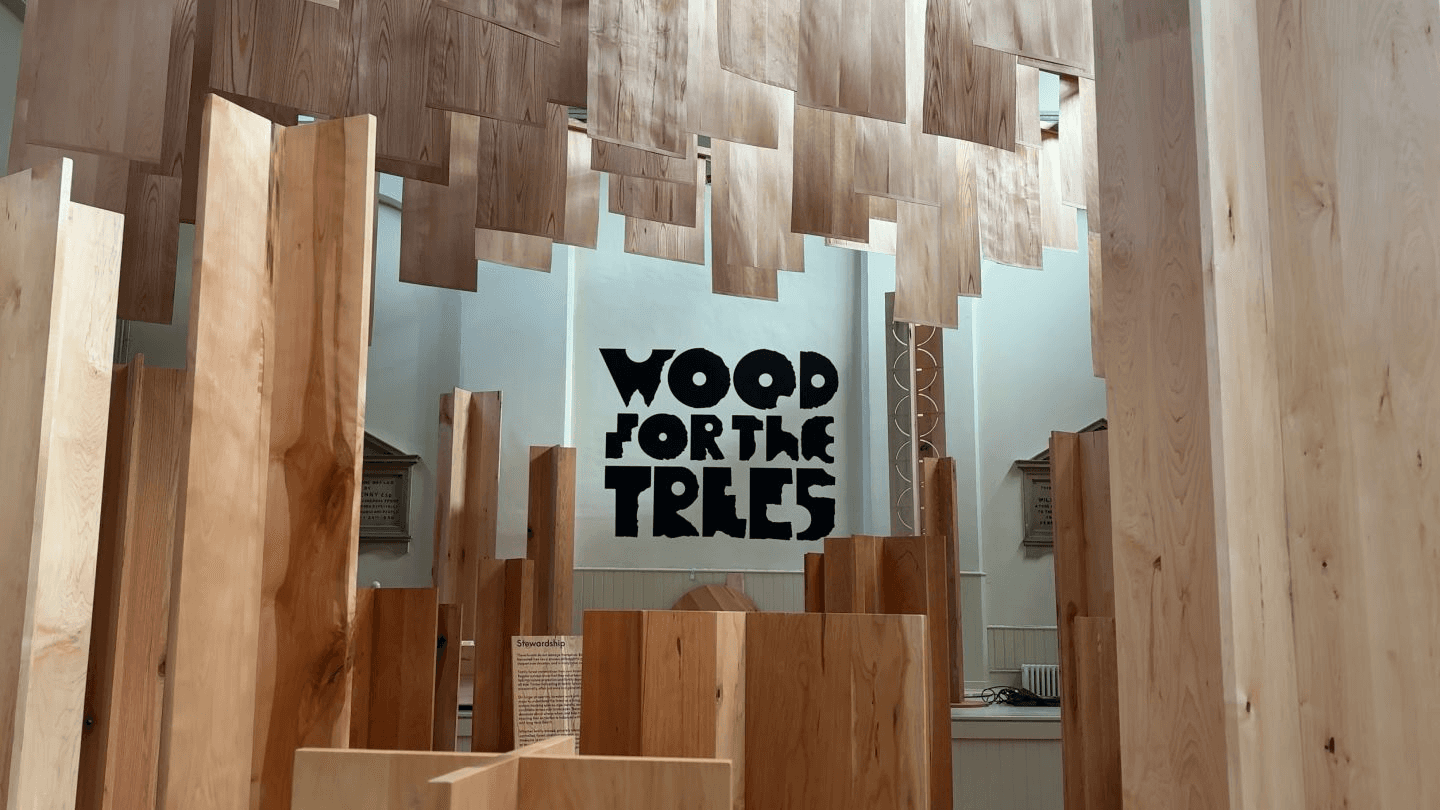
At first glance, Wood for the Trees by AHEC, presented with Mitre & Mondays and Benchmark, is remarkably straightforward. Processed wood, simple structures and a spatial language that immediately gives you the feeling of being somewhere inside a forest.
The simplicity is part of its strength.
But what really stayed with me was what was happening behind the exhibition.
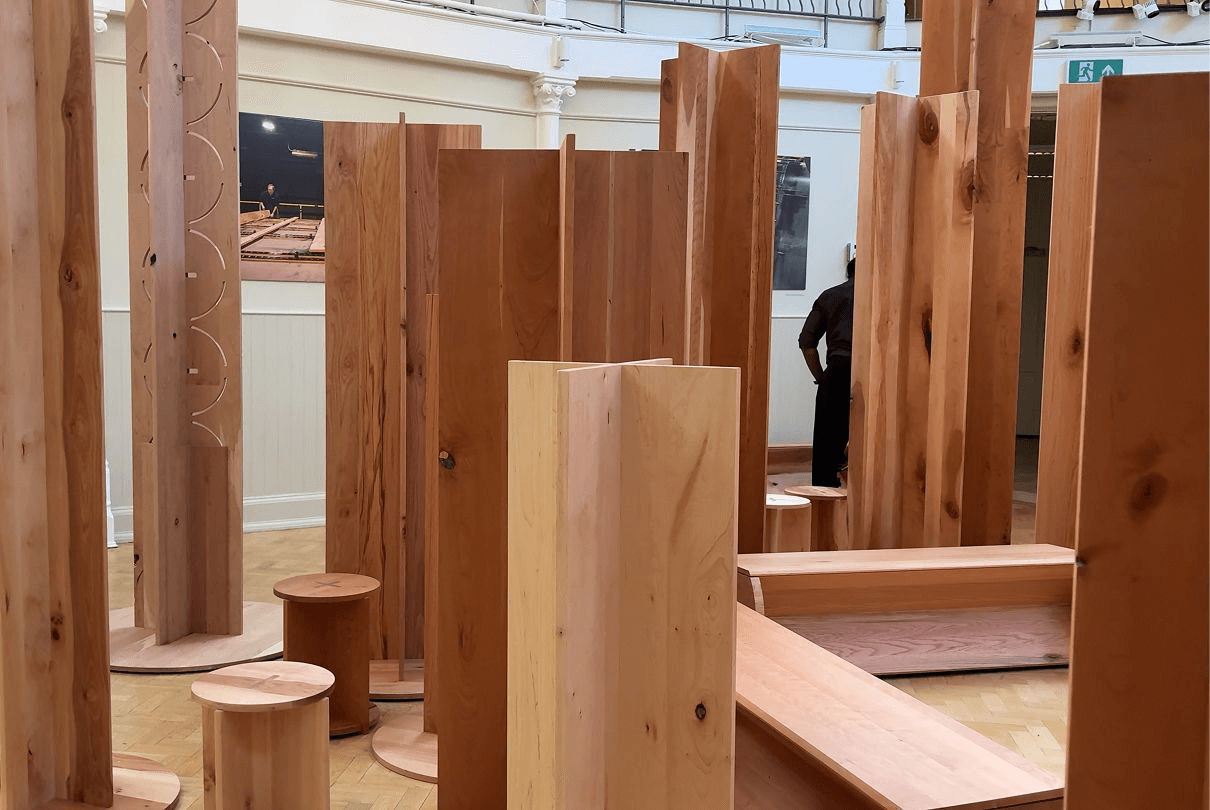
During the festival, some of the timber was being cut and worked in a workshop behind the main installation, with visitors able to participate in the process. Some of those pieces were then transformed into functional elements as stools, which would later be used beyond the exhibition.
That completely changed how I looked at the installation.
It was not simply something built for LDF and then taken apart when the festival finished. The exhibition was actually continuing to evolve. The material was being processed, turned into something useful and given another life.
So the exhibition itself becomes part of the object's journey rather than its final destination.
House of ICON: Designing with What Already Exists
House of ICON returned to Shoreditch Town Hall for LDF 2026, bringing together a selection of interiors, furniture and design brands within the building's existing historic spaces.
Among the selection, Isola Design’ space particularly caught my attention.
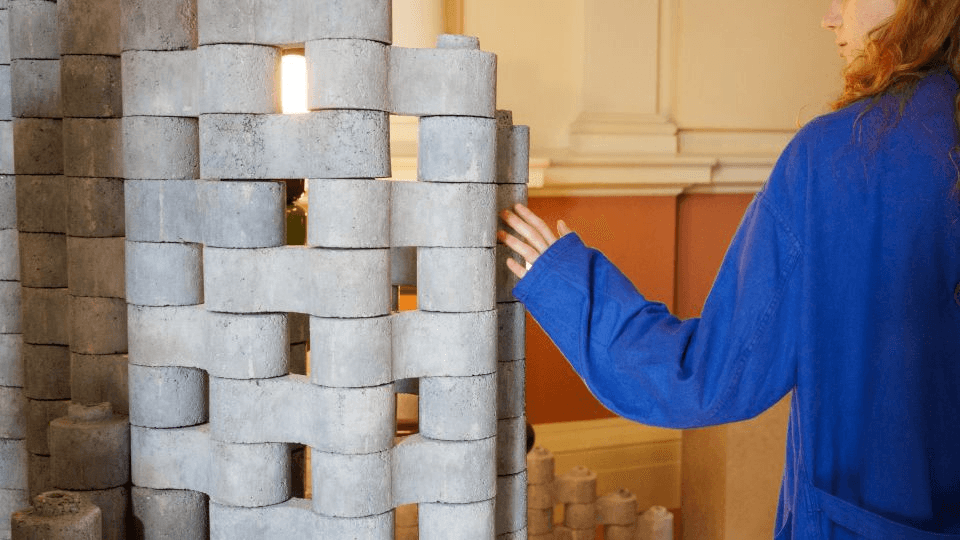
The projects themselves were nicely selected and inspiring, but what I loved most was something slightly less obvious: seeing pieces from previous years' exhibitors being used as part of this year's exhibition stands. Surfaces from KAVA and structures from Mckie's Rotational Bricks.
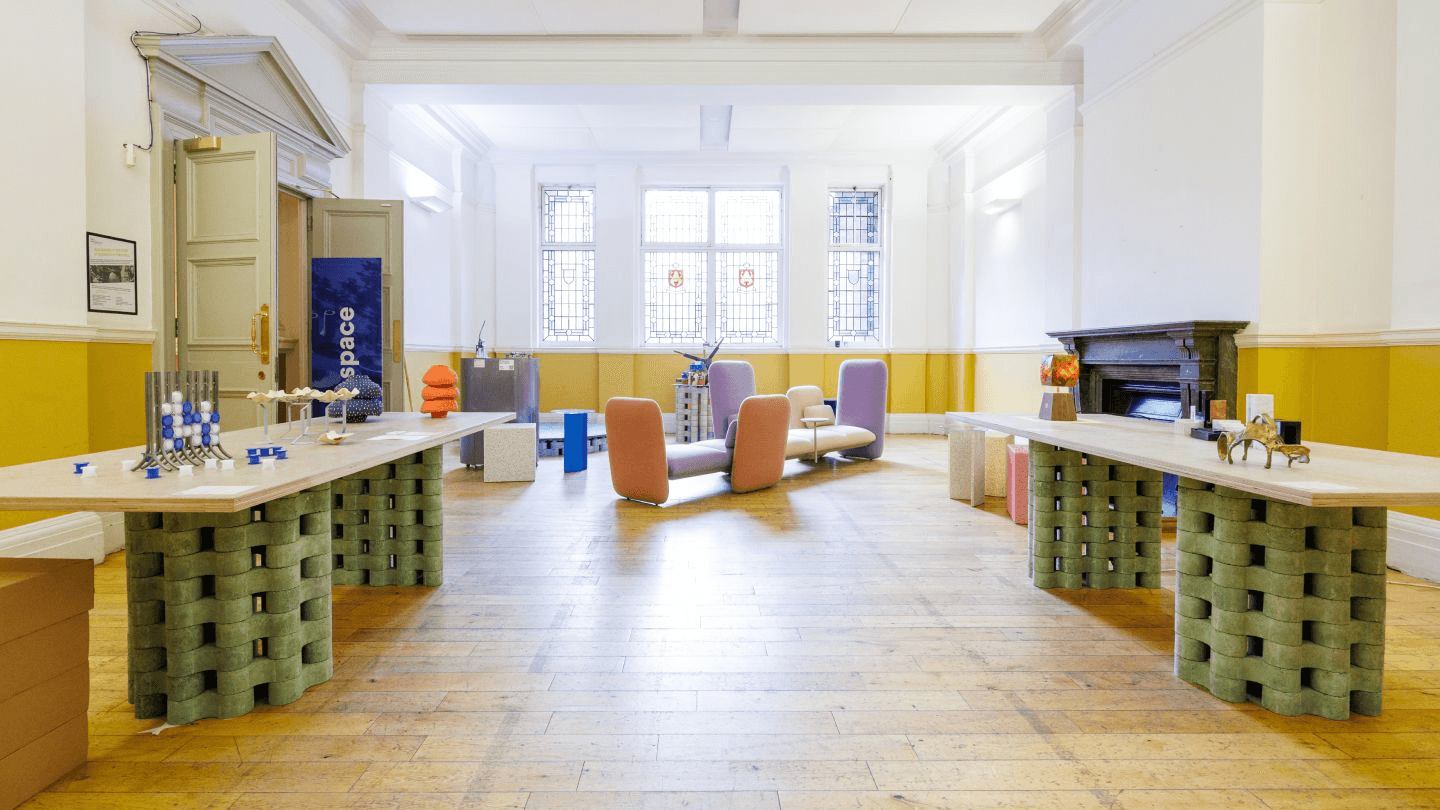
It is a small decision, but one that really made me think about how we build exhibitions.
Instead of starting again from zero every year, elements that have already been produced are given another purpose. They become part of a new exhibition rather than becoming something that exists for one event and then disappears.
We talk a lot about sustainability in terms of materials and manufacturing, but exhibitions have their own question to answer:
We often talk about sustainable design through materials and manufacturing but sustainability is a mindset its about how you think around you.
V&A Awakenings
The V&A's Awakenings programme brought together projects exploring technology, culture, craft and new ways of thinking about the relationship between humans and machines.
Two projects from the selection particularly caught my attention: Sender Unknown by Aziza Kadyri and Image Syncers by Nina Davies.
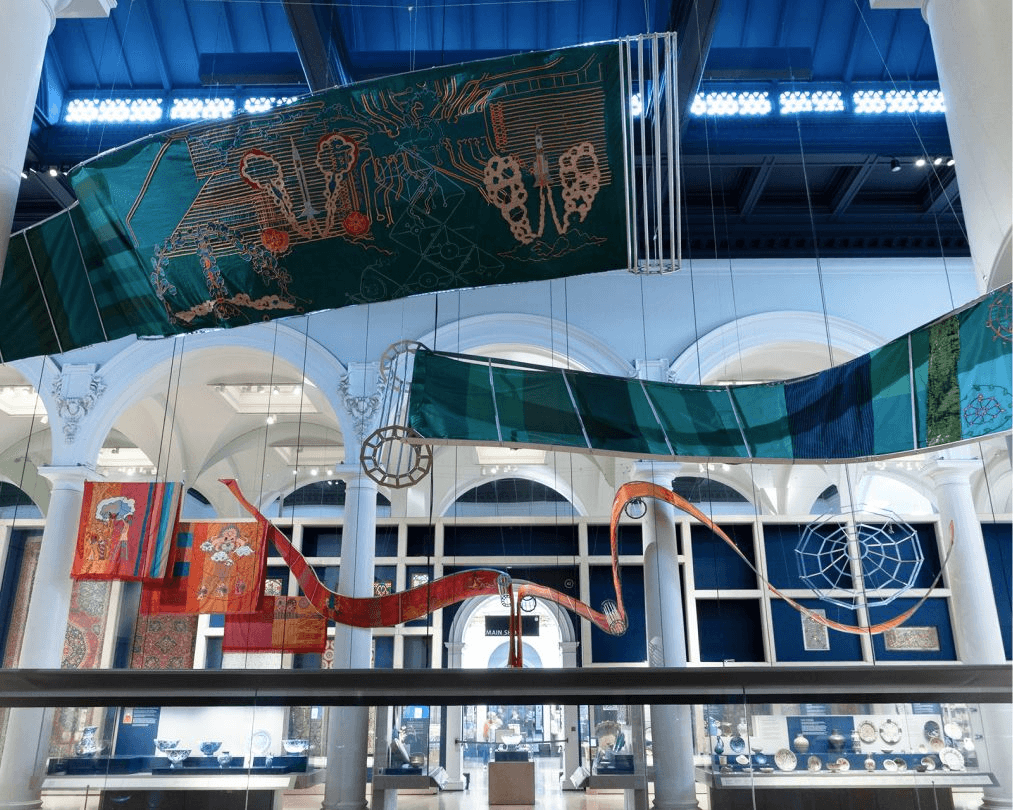
Sender Unknown brings together traditional Uzbek suzani embroidery, digital textile printing and AI. Kadyri responds to the V&A's historic suzani collection, exploring what happens when traditional visual languages enter digital systems and datasets.
There is a lot to unpack in the relationship between AI, craft, cultural memory and the process of making. But what caught my eye immediately was actually the physical execution of the work.
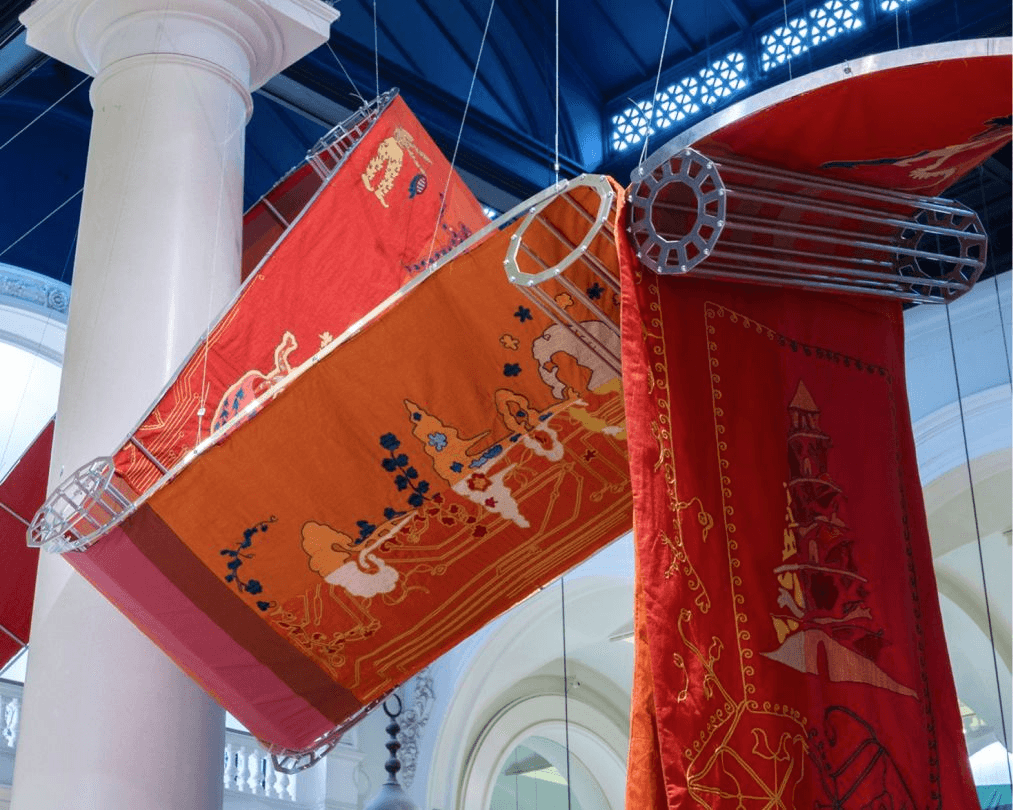
The softness of the textile and the detailed fabric work sit against metal structures, creating a really beautiful contrast. Rather than feeling like individual textile pieces placed inside a museum room, the work seemed to occupy and transform the room itself.
The scale and the way the fabric filled the space made the installation feel architectural. That physical relationship between the material and the V&A environment was what made the work particularly memorable for me.
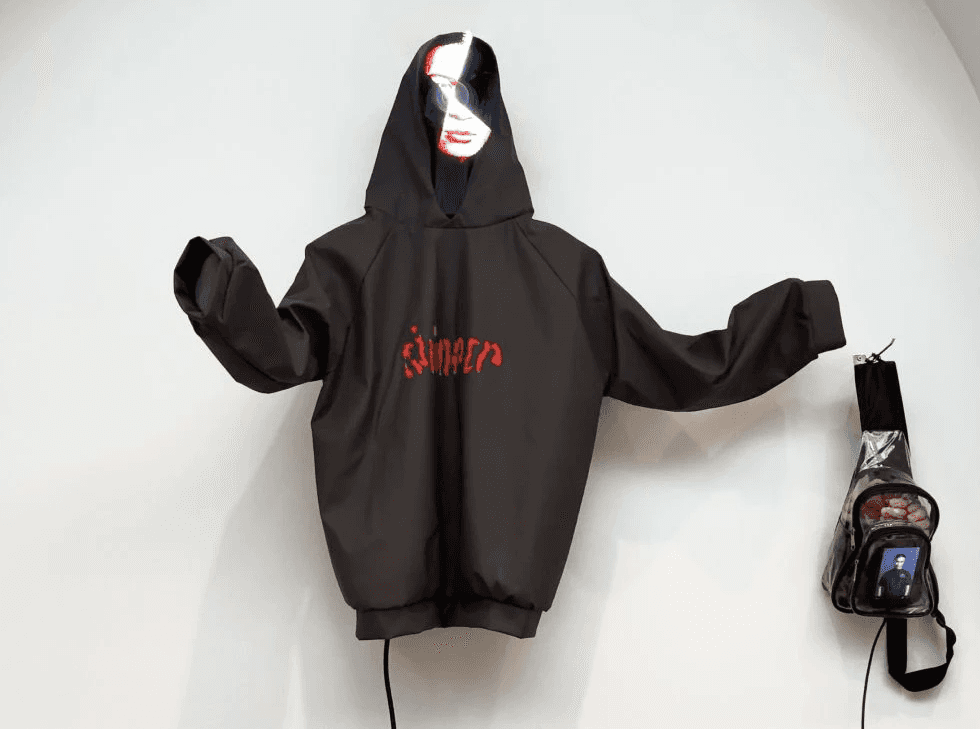
Image Syncers by Nina Davies caught me in a completely different way.
There is a video component to the project, but it was the physical installation alongside it that really drew my attention.
The combination of clothes, accessories and physical objects creates this strange, slightly unsettling world. But the element I kept looking at was the series of faces.
They appear and disappear through a rotating mechanism, almost like a fan, creating fragmented, intermittent images of faces. It is simple as an installation mechanism, but the effect is quite strange.
And I think that is exactly what makes it work for me. Sometimes a good design project does not always need to give you an immediate answer. Sometimes it is the questions you carry with you after leaving that make the project successful.
Dimense Surface
At SCP Showroom, the conversation around texture and tactility felt particularly relevant in a design landscape increasingly dominated by digital imagery.
The Collaboration Series presented textured wallcoverings created with Nice Projects, JAM, LOVEISENOUGH and Keiji Ashizawa Design.
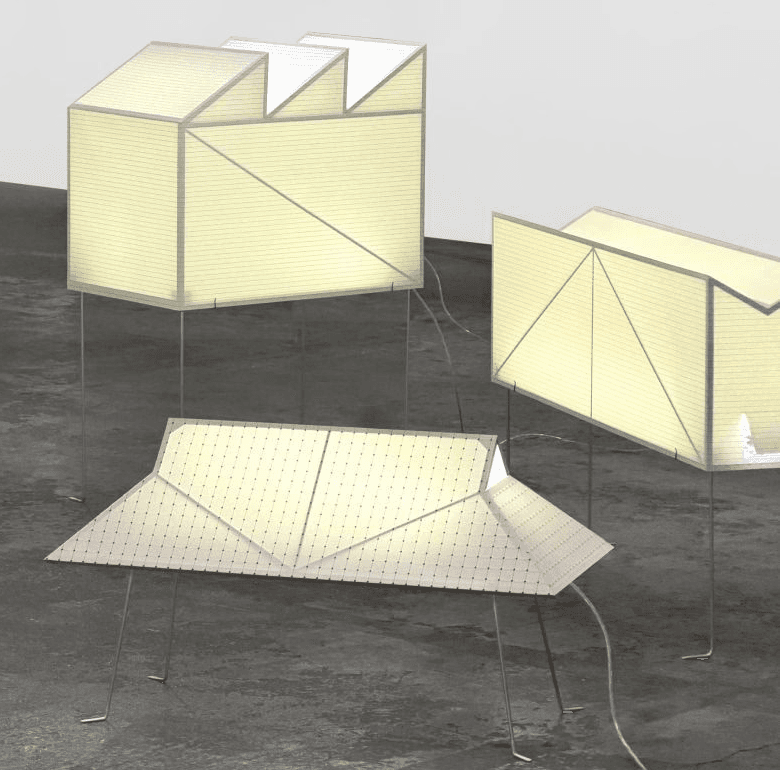
What really caught my attention was not necessarily the technology itself, but how simply two very familiar technologies were brought together in a clever way.
The process uses 3D printing to create the patterns, turning those printed forms into moulds. The moulds are then used to create the texture, while traditional ink printing adds the surface image.
Neither technique is particularly new on its own. Two everyday, well-established processes are combined in a way that produces something neither would create alone.
I was honestly thinking: is this innovation, or is it a very clever cheat? Whatever you call, I loved it. It is a good reminder that innovation does not always have to mean inventing a completely new technology.
That connection becomes something you can actually see, touch and experience.
That made the project much more interesting to me than simply looking at a beautiful finished wallpaper. Sometimes the smartest design solution is simply a very good combination of things we already know.

Design Burger: The Product Design 100
A major highlight was Design Burger's The Product Design 100. Bringing together 100 realised products across contemporary product and industrial design, the exhibition felt like a significant moment for the platform and a major piece of work in itself.
The selection is the result of Design Burger's work documenting contemporary product and industrial design over the past eight years, and the exhibition launched alongside its first book, a 324-page collection of the 100 projects.
We spend so much time seeing product design through Instagram, websites, portfolios and press images. What I enjoyed most was simply being able to see some of the products together in real life.
The selection also deliberately avoids being tied to a single aesthetic or trend, instead focusing on clarity of purpose, quality and relevance to the wider industrial design conversation.
What Stayed With Us
Looking back at the projects I picked, I realised that what interested me most was not necessarily a particular material, technology or aesthetic.
It is the process and storytelling
At a festival full of things to look at, the projects that stayed with me were the ones that made me stop, look again, and think about what happens beyond the object itself.
London Design Festival 2026 brought together an enormous range of ideas, materials, technologies and approaches to design. Across the ten-day festival moved between exhibitions, installations, showrooms and conversations, but a few projects stayed with me for reasons beyond their visual impact.
Here are a few of the projects that caught my attention.
Wood for the Trees: When an Exhibition Keeps Living
At first glance, Wood for the Trees by AHEC, presented with Mitre & Mondays and Benchmark, is remarkably straightforward. Processed wood, simple structures and a spatial language that immediately gives you the feeling of being somewhere inside a forest.
The simplicity is part of its strength.
But what really stayed with me was what was happening behind the exhibition.
During the festival, some of the timber was being cut and worked in a workshop behind the main installation, with visitors able to participate in the process. Some of those pieces were then transformed into functional elements as stools, which would later be used beyond the exhibition.
That completely changed how I looked at the installation.
It was not simply something built for LDF and then taken apart when the festival finished. The exhibition was actually continuing to evolve. The material was being processed, turned into something useful and given another life.
So the exhibition itself becomes part of the object's journey rather than its final destination.
House of ICON: Designing with What Already Exists
House of ICON returned to Shoreditch Town Hall for LDF 2026, bringing together a selection of interiors, furniture and design brands within the building's existing historic spaces.
Among the selection, Isola Design’ space particularly caught my attention.
The projects themselves were nicely selected and inspiring, but what I loved most was something slightly less obvious: seeing pieces from previous years' exhibitors being used as part of this year's exhibition stands. Surfaces from KAVA and structures from Mckie's Rotational Bricks.
It is a small decision, but one that really made me think about how we build exhibitions.
Instead of starting again from zero every year, elements that have already been produced are given another purpose. They become part of a new exhibition rather than becoming something that exists for one event and then disappears.
We talk a lot about sustainability in terms of materials and manufacturing, but exhibitions have their own question to answer:
We often talk about sustainable design through materials and manufacturing but sustainability is a mindset its about how you think around you.
V&A Awakenings
The V&A's Awakenings programme brought together projects exploring technology, culture, craft and new ways of thinking about the relationship between humans and machines.
Two projects from the selection particularly caught my attention: Sender Unknown by Aziza Kadyri and Image Syncers by Nina Davies.
Sender Unknown brings together traditional Uzbek suzani embroidery, digital textile printing and AI. Kadyri responds to the V&A's historic suzani collection, exploring what happens when traditional visual languages enter digital systems and datasets.
There is a lot to unpack in the relationship between AI, craft, cultural memory and the process of making. But what caught my eye immediately was actually the physical execution of the work.
The softness of the textile and the detailed fabric work sit against metal structures, creating a really beautiful contrast. Rather than feeling like individual textile pieces placed inside a museum room, the work seemed to occupy and transform the room itself.
The scale and the way the fabric filled the space made the installation feel architectural. That physical relationship between the material and the V&A environment was what made the work particularly memorable for me.
Image Syncers by Nina Davies caught me in a completely different way.
There is a video component to the project, but it was the physical installation alongside it that really drew my attention.
The combination of clothes, accessories and physical objects creates this strange, slightly unsettling world. But the element I kept looking at was the series of faces.
They appear and disappear through a rotating mechanism, almost like a fan, creating fragmented, intermittent images of faces. It is simple as an installation mechanism, but the effect is quite strange.
And I think that is exactly what makes it work for me. Sometimes a good design project does not always need to give you an immediate answer. Sometimes it is the questions you carry with you after leaving that make the project successful.
Dimense Surface
At SCP Showroom, the conversation around texture and tactility felt particularly relevant in a design landscape increasingly dominated by digital imagery.
The Collaboration Series presented textured wallcoverings created with Nice Projects, JAM, LOVEISENOUGH and Keiji Ashizawa Design.
What really caught my attention was not necessarily the technology itself, but how simply two very familiar technologies were brought together in a clever way.
The process uses 3D printing to create the patterns, turning those printed forms into moulds. The moulds are then used to create the texture, while traditional ink printing adds the surface image.
Neither technique is particularly new on its own. Two everyday, well-established processes are combined in a way that produces something neither would create alone.
I was honestly thinking: is this innovation, or is it a very clever cheat? Whatever you call, I loved it. It is a good reminder that innovation does not always have to mean inventing a completely new technology.
That connection becomes something you can actually see, touch and experience.
That made the project much more interesting to me than simply looking at a beautiful finished wallpaper. Sometimes the smartest design solution is simply a very good combination of things we already know.
Design Burger: The Product Design 100
A major highlight was Design Burger's The Product Design 100. Bringing together 100 realised products across contemporary product and industrial design, the exhibition felt like a significant moment for the platform and a major piece of work in itself.
The selection is the result of Design Burger's work documenting contemporary product and industrial design over the past eight years, and the exhibition launched alongside its first book, a 324-page collection of the 100 projects.
We spend so much time seeing product design through Instagram, websites, portfolios and press images. What I enjoyed most was simply being able to see some of the products together in real life.
The selection also deliberately avoids being tied to a single aesthetic or trend, instead focusing on clarity of purpose, quality and relevance to the wider industrial design conversation.
What Stayed With Us
Looking back at the projects I picked, I realised that what interested me most was not necessarily a particular material, technology or aesthetic.
It is the process and storytelling
At a festival full of things to look at, the projects that stayed with me were the ones that made me stop, look again, and think about what happens beyond the object itself.
London Design Festival 2026 brought together an enormous range of ideas, materials, technologies and approaches to design. Across the ten-day festival moved between exhibitions, installations, showrooms and conversations, but a few projects stayed with me for reasons beyond their visual impact.
Here are a few of the projects that caught my attention.
Wood for the Trees: When an Exhibition Keeps Living
At first glance, Wood for the Trees by AHEC, presented with Mitre & Mondays and Benchmark, is remarkably straightforward. Processed wood, simple structures and a spatial language that immediately gives you the feeling of being somewhere inside a forest.
The simplicity is part of its strength.
But what really stayed with me was what was happening behind the exhibition.
During the festival, some of the timber was being cut and worked in a workshop behind the main installation, with visitors able to participate in the process. Some of those pieces were then transformed into functional elements as stools, which would later be used beyond the exhibition.
That completely changed how I looked at the installation.
It was not simply something built for LDF and then taken apart when the festival finished. The exhibition was actually continuing to evolve. The material was being processed, turned into something useful and given another life.
So the exhibition itself becomes part of the object's journey rather than its final destination.
House of ICON: Designing with What Already Exists
House of ICON returned to Shoreditch Town Hall for LDF 2026, bringing together a selection of interiors, furniture and design brands within the building's existing historic spaces.
Among the selection, Isola Design’ space particularly caught my attention.
The projects themselves were nicely selected and inspiring, but what I loved most was something slightly less obvious: seeing pieces from previous years' exhibitors being used as part of this year's exhibition stands. Surfaces from KAVA and structures from Mckie's Rotational Bricks.
It is a small decision, but one that really made me think about how we build exhibitions.
Instead of starting again from zero every year, elements that have already been produced are given another purpose. They become part of a new exhibition rather than becoming something that exists for one event and then disappears.
We talk a lot about sustainability in terms of materials and manufacturing, but exhibitions have their own question to answer:
We often talk about sustainable design through materials and manufacturing but sustainability is a mindset its about how you think around you.
V&A Awakenings
The V&A's Awakenings programme brought together projects exploring technology, culture, craft and new ways of thinking about the relationship between humans and machines.
Two projects from the selection particularly caught my attention: Sender Unknown by Aziza Kadyri and Image Syncers by Nina Davies.
Sender Unknown brings together traditional Uzbek suzani embroidery, digital textile printing and AI. Kadyri responds to the V&A's historic suzani collection, exploring what happens when traditional visual languages enter digital systems and datasets.
There is a lot to unpack in the relationship between AI, craft, cultural memory and the process of making. But what caught my eye immediately was actually the physical execution of the work.
The softness of the textile and the detailed fabric work sit against metal structures, creating a really beautiful contrast. Rather than feeling like individual textile pieces placed inside a museum room, the work seemed to occupy and transform the room itself.
The scale and the way the fabric filled the space made the installation feel architectural. That physical relationship between the material and the V&A environment was what made the work particularly memorable for me.
Image Syncers by Nina Davies caught me in a completely different way.
There is a video component to the project, but it was the physical installation alongside it that really drew my attention.
The combination of clothes, accessories and physical objects creates this strange, slightly unsettling world. But the element I kept looking at was the series of faces.
They appear and disappear through a rotating mechanism, almost like a fan, creating fragmented, intermittent images of faces. It is simple as an installation mechanism, but the effect is quite strange.
And I think that is exactly what makes it work for me. Sometimes a good design project does not always need to give you an immediate answer. Sometimes it is the questions you carry with you after leaving that make the project successful.
Dimense Surface
At SCP Showroom, the conversation around texture and tactility felt particularly relevant in a design landscape increasingly dominated by digital imagery.
The Collaboration Series presented textured wallcoverings created with Nice Projects, JAM, LOVEISENOUGH and Keiji Ashizawa Design.
What really caught my attention was not necessarily the technology itself, but how simply two very familiar technologies were brought together in a clever way.
The process uses 3D printing to create the patterns, turning those printed forms into moulds. The moulds are then used to create the texture, while traditional ink printing adds the surface image.
Neither technique is particularly new on its own. Two everyday, well-established processes are combined in a way that produces something neither would create alone.
I was honestly thinking: is this innovation, or is it a very clever cheat? Whatever you call, I loved it. It is a good reminder that innovation does not always have to mean inventing a completely new technology.
That connection becomes something you can actually see, touch and experience.
That made the project much more interesting to me than simply looking at a beautiful finished wallpaper. Sometimes the smartest design solution is simply a very good combination of things we already know.
Design Burger: The Product Design 100
A major highlight was Design Burger's The Product Design 100. Bringing together 100 realised products across contemporary product and industrial design, the exhibition felt like a significant moment for the platform and a major piece of work in itself.
The selection is the result of Design Burger's work documenting contemporary product and industrial design over the past eight years, and the exhibition launched alongside its first book, a 324-page collection of the 100 projects.
We spend so much time seeing product design through Instagram, websites, portfolios and press images. What I enjoyed most was simply being able to see some of the products together in real life.
The selection also deliberately avoids being tied to a single aesthetic or trend, instead focusing on clarity of purpose, quality and relevance to the wider industrial design conversation.
What Stayed With Us
Looking back at the projects I picked, I realised that what interested me most was not necessarily a particular material, technology or aesthetic.
It is the process and storytelling
At a festival full of things to look at, the projects that stayed with me were the ones that made me stop, look again, and think about what happens beyond the object itself.