Author
DesignUplift
The modern electric vehicle has largely become a sterile exercise in "screenification." For over a decade, the industry has operated under a bizarre and lazy assumption: that because a car's power source is digital, its interface must be an inert slab of glass. This has birthed a landscape of "iPads on wheels," where the visceral drama of driving is buried under layers of laggy sub-menus and soul-less touch-capacitive surfaces.
The Ferrari Luce, Maranello’s inaugural foray into pure electrification, arrives not merely as a car, but as a design manifesto. It is a calculated strike against digital fatigue, reclaiming the tactile choreography that defines the Prancing Horse. While rivals double down on the "mobile lounge" aesthetic, Ferrari is utilizing its 735kW (1000+ hp) debut to prove that the transition to electrons does not require the death of the tactile soul.
Tactility as Luxury
In a stroke of industrial brilliance, Ferrari collaborated with LoveFrom; the creative collective led by Sir Jony Ive and Marc Newson. In an era defined by the iPhone’s glass-only legacy, Ive has pivoted toward a "tactile choreography" that treats the driver's hands with sacred respect. His stance for the Luce is uncompromising: "Touch doesn’t belong in cars."
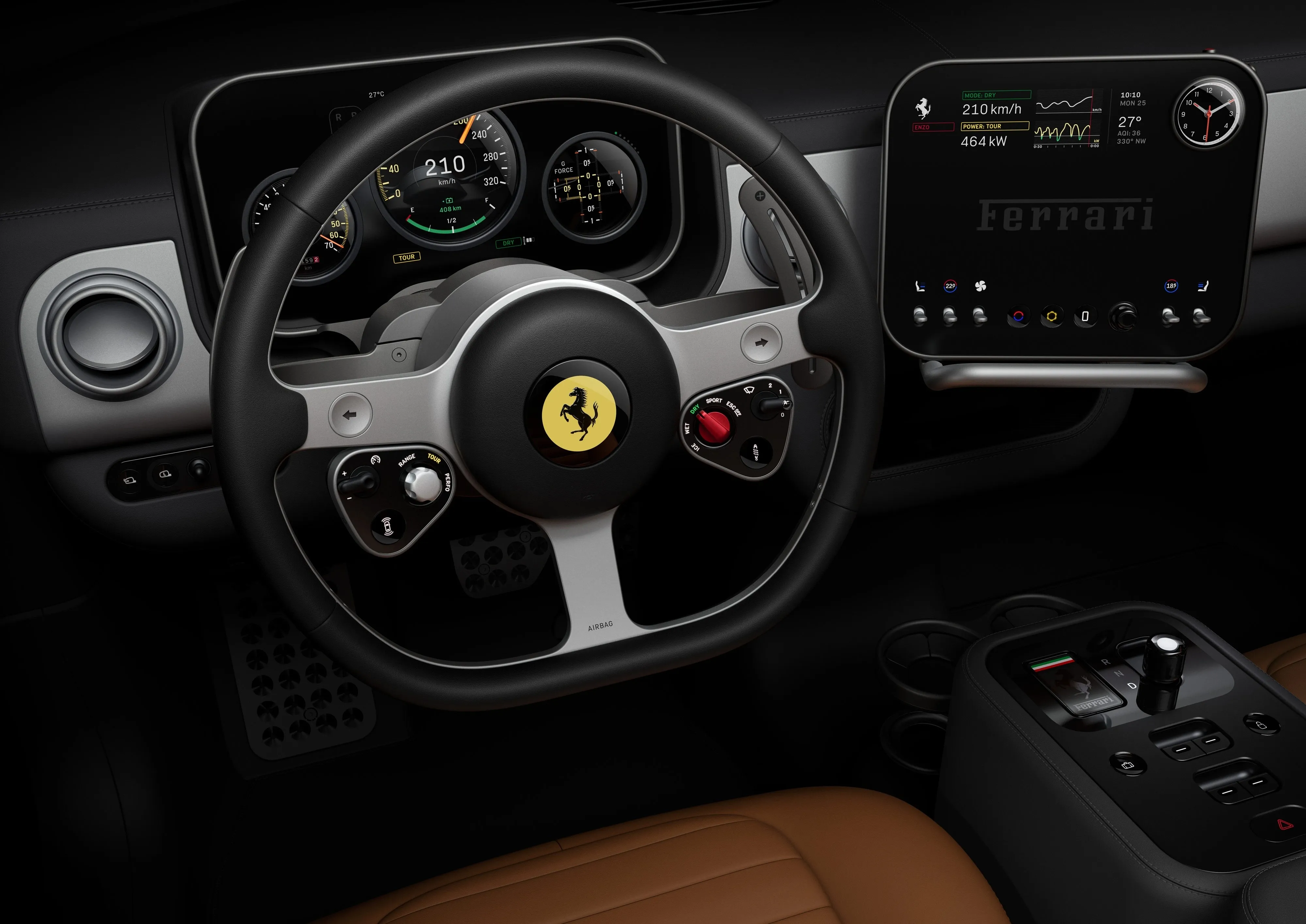
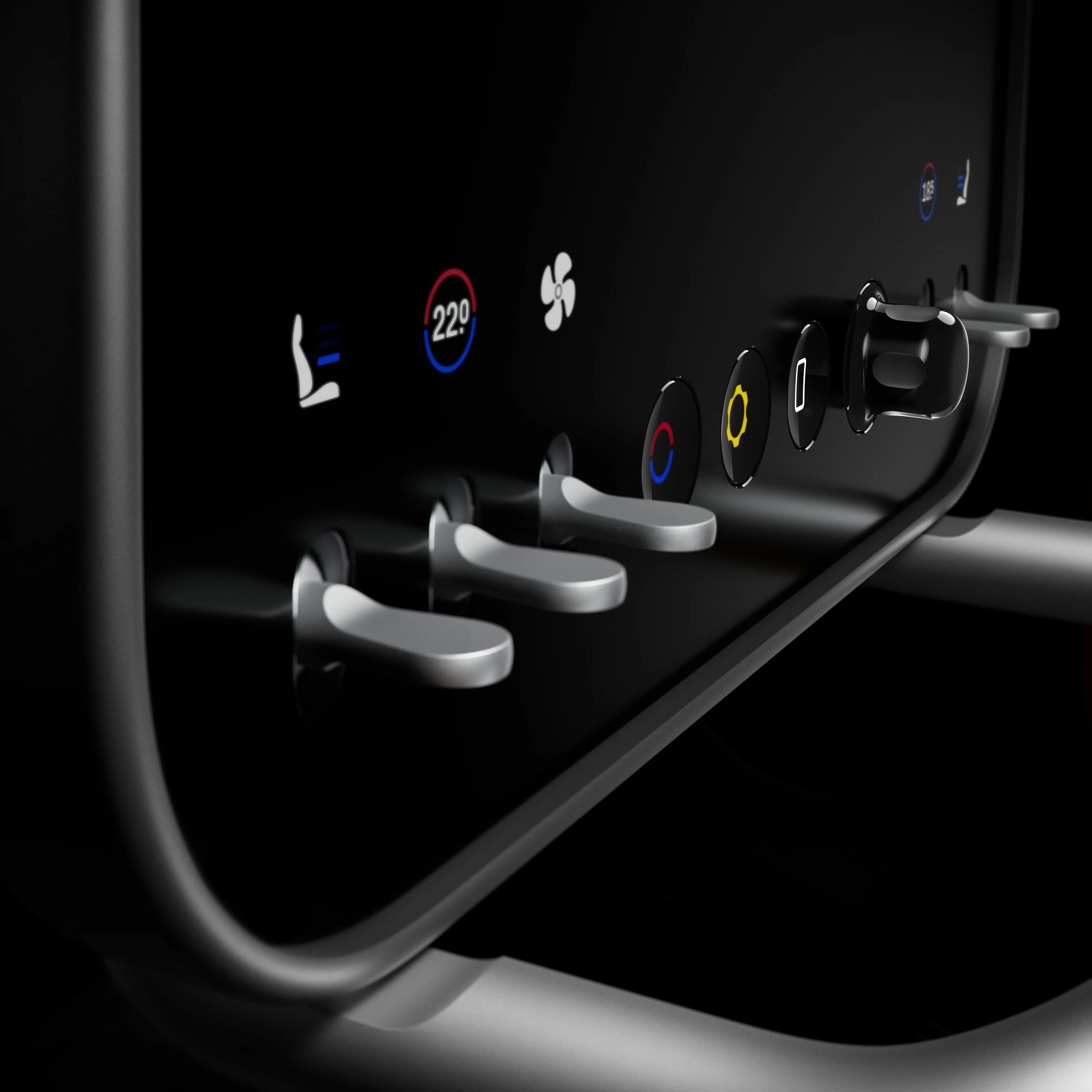
The Luce’s interior is a masterclass in material honesty. Eschewing the industry’s "screen-first" dogma, the cockpit is defined by CNC-machined billets and switches that provide a mechanical, "rifle-bolt" feedback. This focus on tactile feedback is a direct response to the cognitive load required by touchscreens; it allows the driver to operate the machine by feel, preserving focus for the road.
"It’s a bizarre and lazy assumption that the interface should be digital if the power source is electric." Sir Jony Ive.
This approach prioritizes the "joy and love of driving" over menu-diving. Every button and rotary control underwent more than 20 evaluation tests with Ferrari test drivers to ensure the acoustic and mechanical feedback was perfectly harmonious.
Material Sincerity
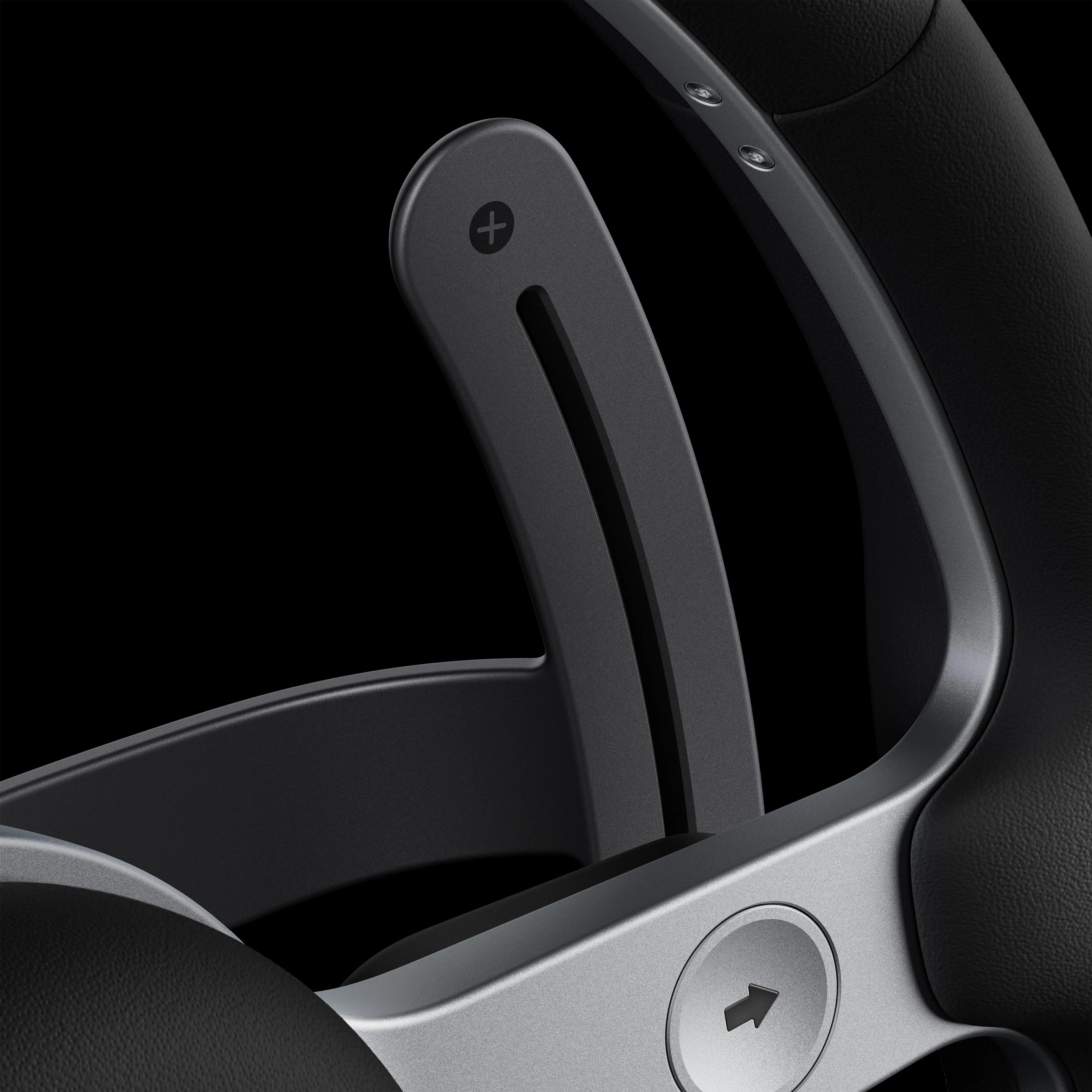
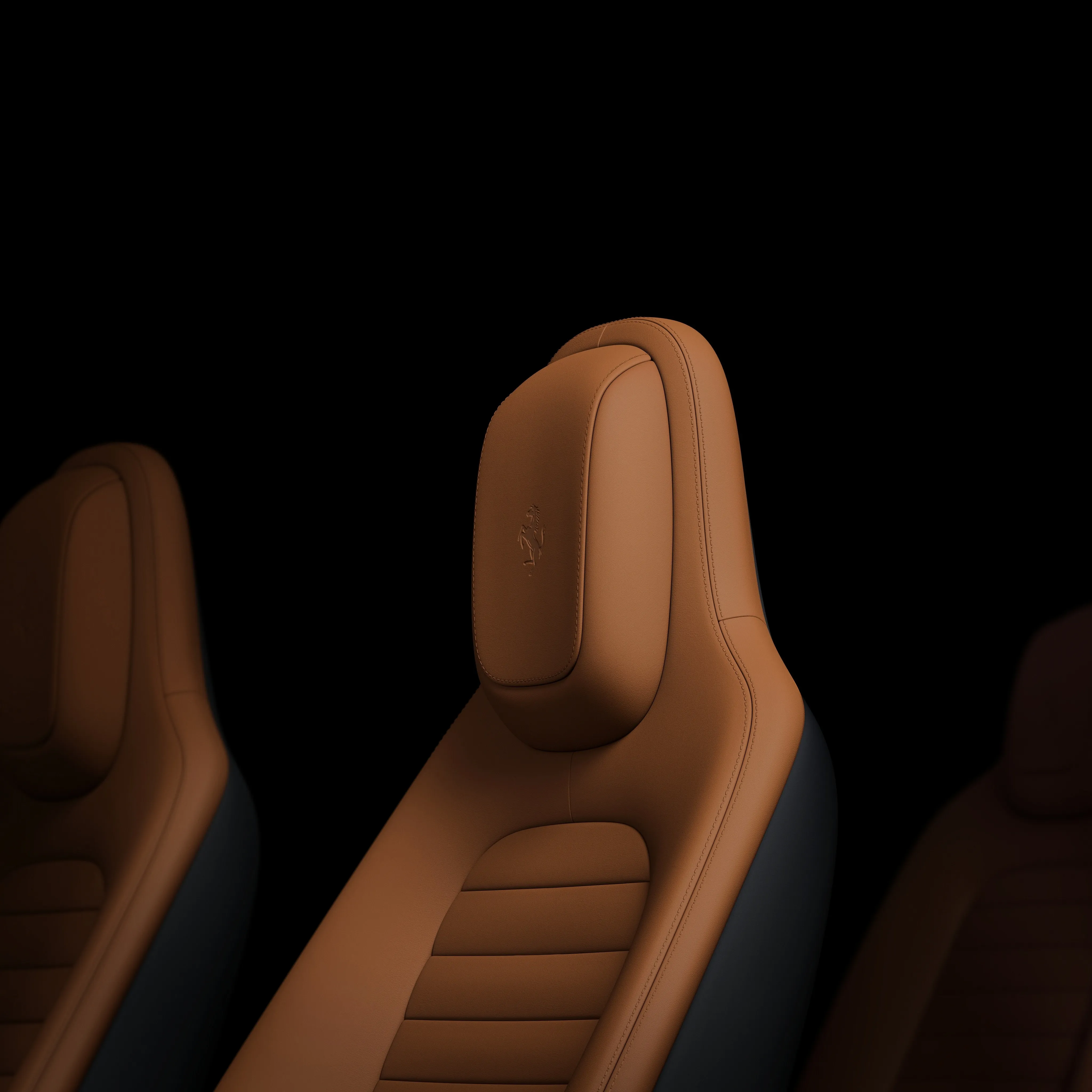
The Luce’s cabin is a study in "industrial chic," utilizing high-performance materials that bridge the gap between sustainability and engineering rigor. The three-spoke steering wheel, a modern interpretation of the 1950s Nardi wood-rim wheels is crafted from 100% recycled aluminum alloys. This anodized structure, featuring microscopic hexagonal cell structures for added hardness, isn't just an aesthetic choice; it’s a functional one.
Mass Optimization: The CNC-machined recycled alloy reduces the steering wheel’s weight by 400g compared to standard Ferrari units.
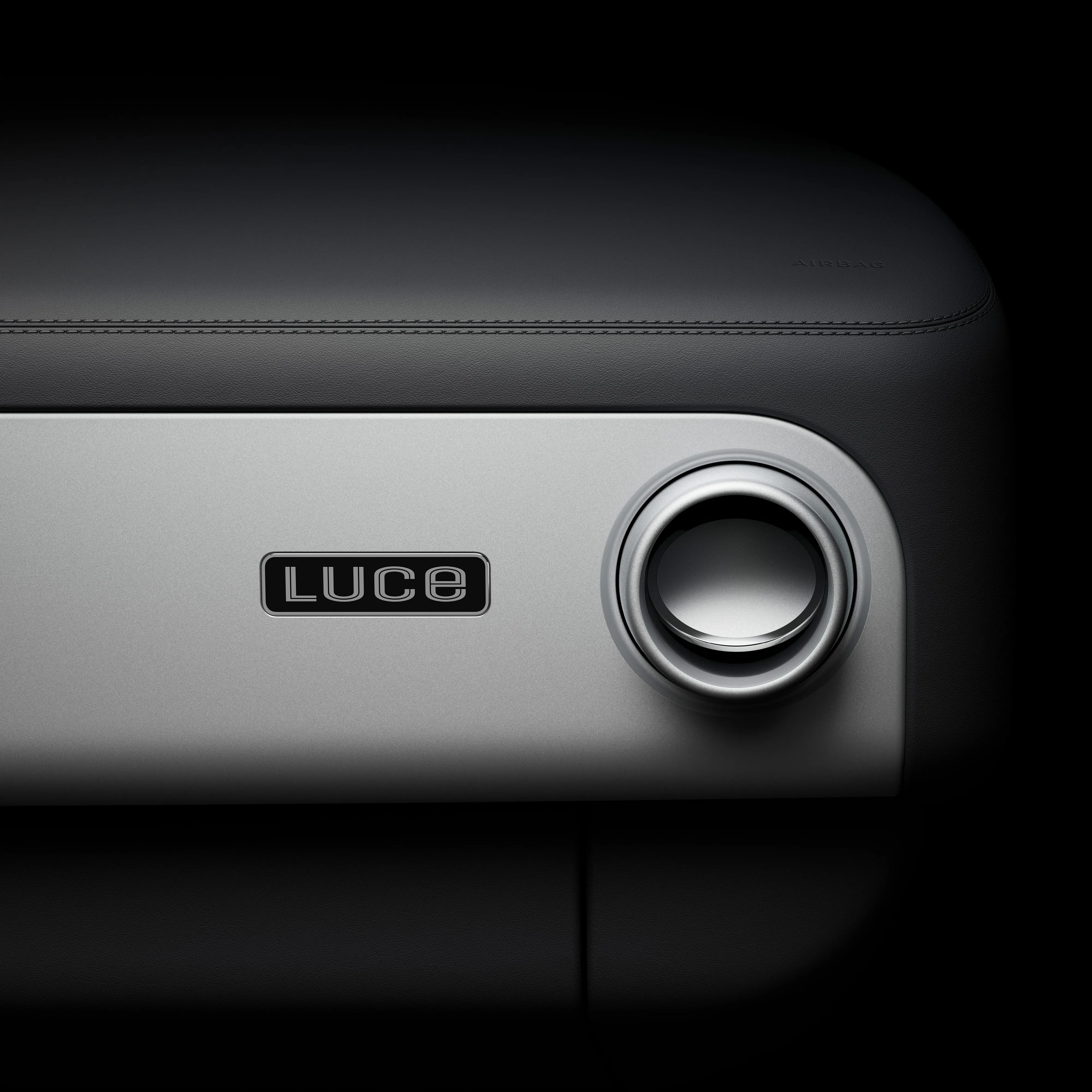
Bespoke Typography: The interior features LF Maranello, a custom typeface designed by Antonio Cavedoni, ensuring that every digital and physical label feels anchored in Italian engineering heritage.
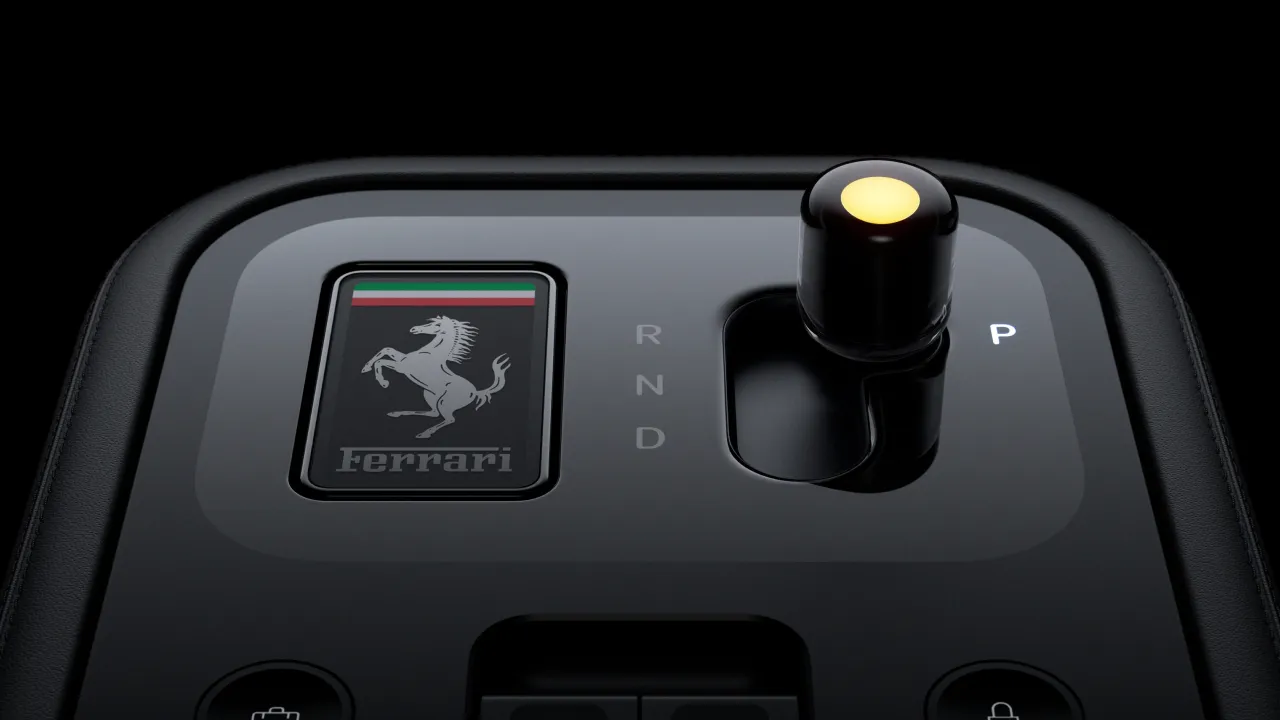
Corning Fusion5 Glass: Marking its automotive debut, this scratch-resistant material is used across over 40 parts in the cabin, including the center console and gear shifter.
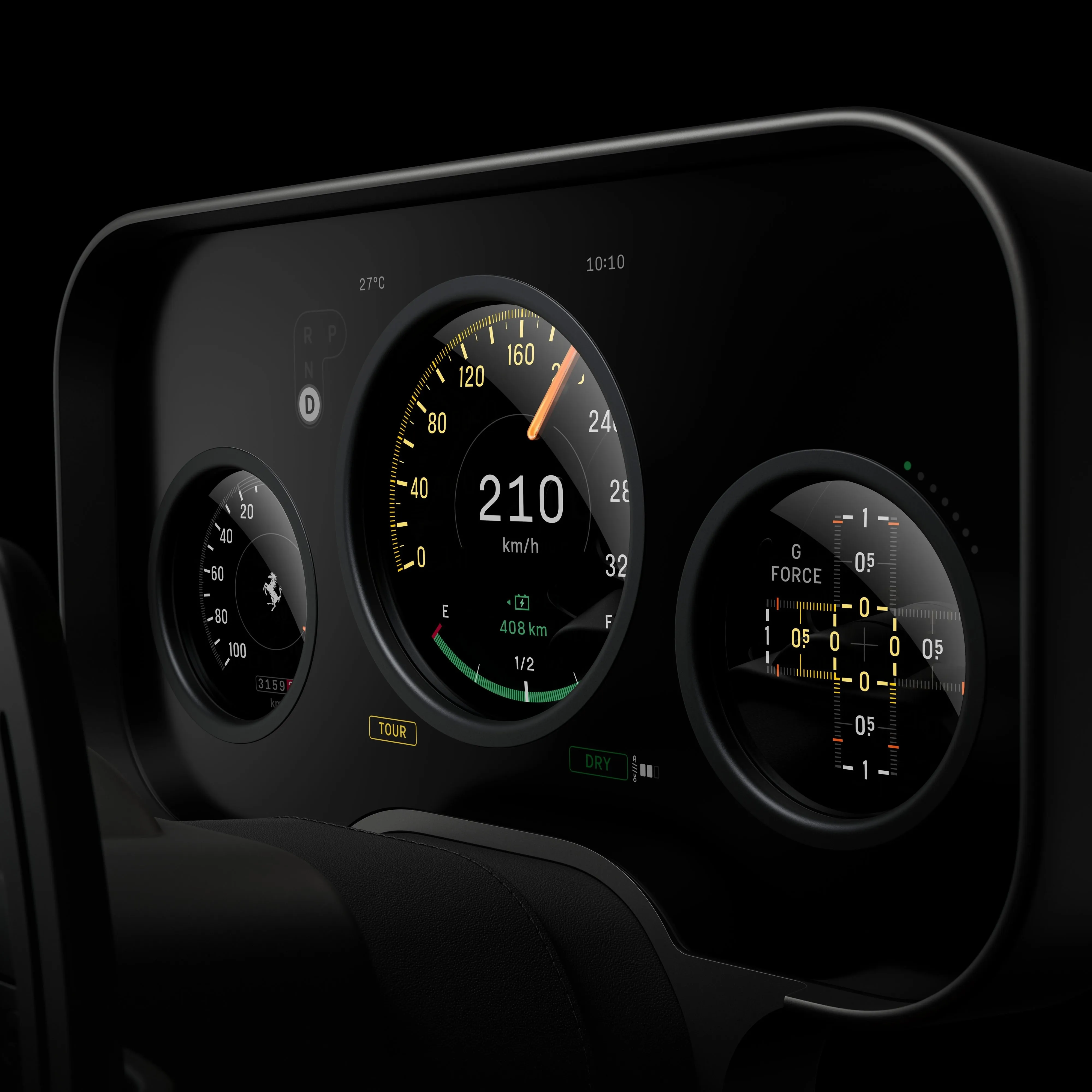
The most evocative use of technology is the "parallax effect" instrumentation. Samsung-developed ultra-thin OLED panels are layered behind physical needles and protected by lens-like glass. This creates a fascinating visual depth that mimics the iconic 1950s Veglia and Jaeger gauges, proving that digital flexibility can coexist with analog soul.
Simplicity is Complexity Resolved
Chief Design Officer Flavio Manzoni describes the Luce as the ultimate realization of the "speed form" concept. It is a stylistic contradiction: geometric, incisive lines that subtend an organic, sculptural volume. Manzoni refers to this as the "plasticity of surfaces linked to the geometric rigor," a philosophy previously explored in the 296GTB but taken to its radical extreme here.
"Simplicity is complexity resolved." Constantin Brâncuși.
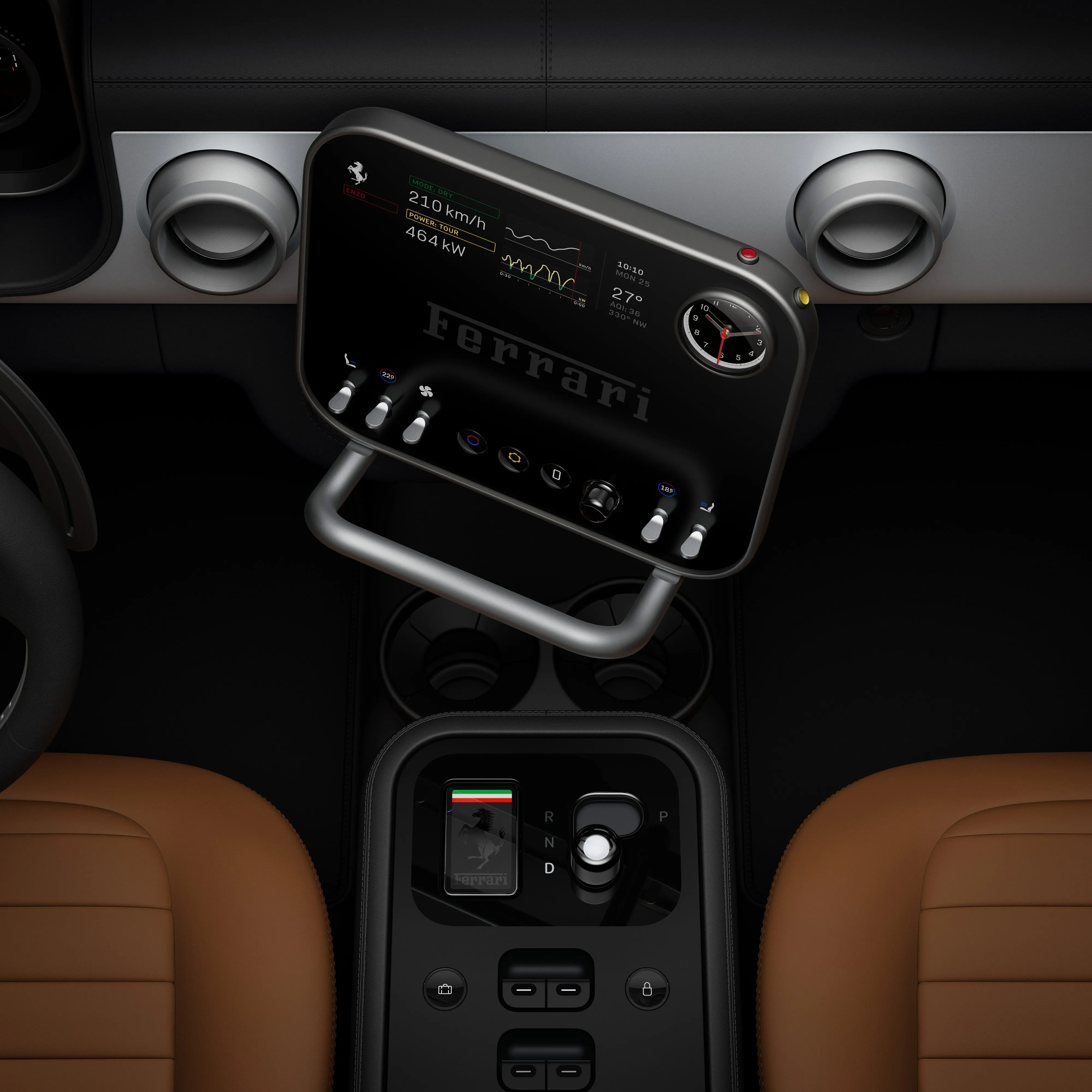
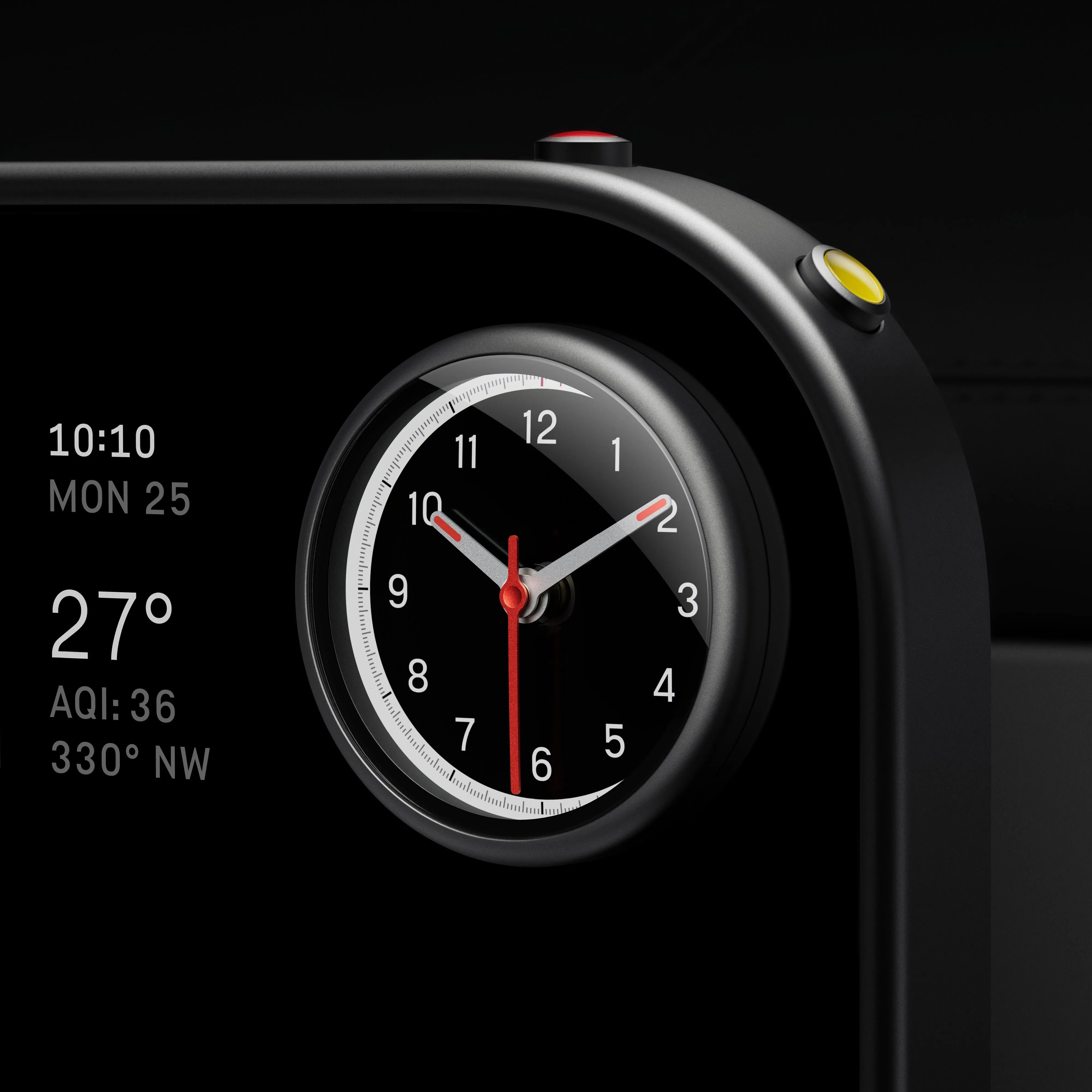
Rather than hiding the engineering requirements of a quad-motor, 122-kWh powertrain behind a flat dashboard, Ferrari transforms them into beauty. A primary example is the 10.12-inch central infotainment screen. It is mounted on a mechanical ball-and-socket joint, allowing it to pivot toward the driver or passenger, an analog solution to a digital requirement that provides a "palm rest" handle to ensure ergonomic stability during performance driving.
The Start-Up as a Sacred Ritual
Electrification often robs a car of its "voice," leading to a silent and emotionally flat experience. Ferrari has redressed the balance by transforming the Human-Machine Interaction (HMI) into a theatrical ritual. This is a deliberate rejection of the unsatisfying, touch-sensitive start buttons found in models like the SF90.
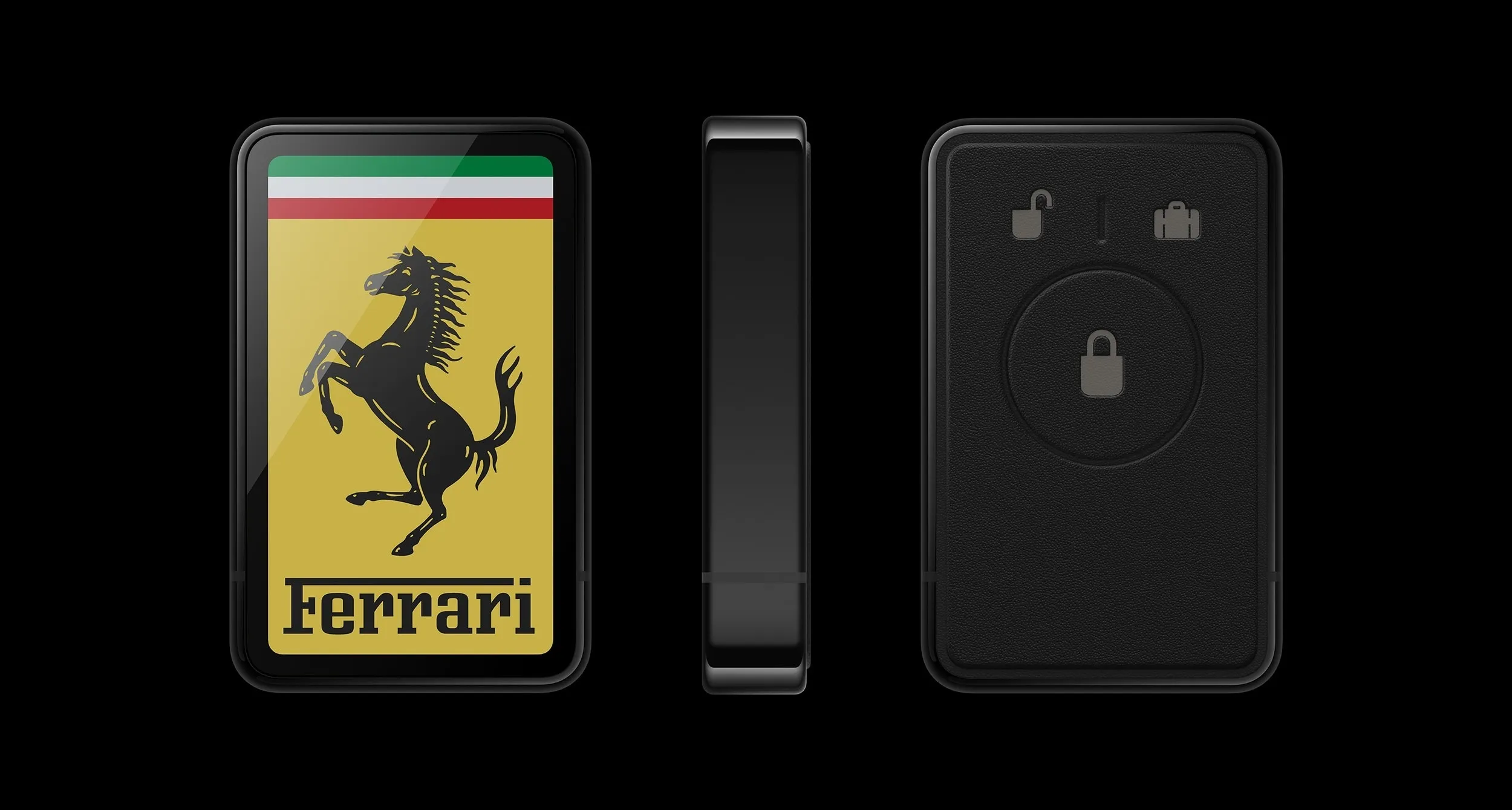
The ritual begins with a glass key fob, shaped like a vintage Zippo lighter and equipped with an E-ink display. When the key is magnetically docked into the center console, it shifts from Ferrari yellow to deep black, triggering a "coordinated light show" where the yellow hue appears to flow from the key into the shifter and across the dashboard.
Aviation Roots: The launch control toggle is located on the roof panel, requiring a deliberate "pull-and-twist" motion that mimics a fighter jet’s ignition.
Dynamic Feedback: Activating maximum acceleration triggers a shift to an orange color scheme across the instrument binnacle, reinforcing the sense of occasion.
The "Long Tail" of Autonomy vs. The Joy of Driving
There is a fundamental divide in intent between Maranello and Silicon Valley. While companies like Tesla view the car as a "mobile lounge" for a future of Full Self-Driving (FSD), Ferrari views the Luce as a driver’s tool. Elon Musk has admitted that achieving total autonomy is "super hard" because of the "long tail" of the distribution; the final 1% of unpredictable real-world scenarios.
Ferrari’s electrification strategy ignores this race toward a driverless future. By focusing on the 99% of the experience that involves human engagement, they have preserved the brand’s emotional DNA. While Musk predicts legacy automakers will struggle to scale AI computers for years, Ferrari has used that time to refine the visceral connection between human and machine.
With a projected range of 330 miles (WLTP) and roughly 280 miles (EPA), the Luce is built for the grand tour; a vehicle designed for the "joy of driving" rather than the convenience of being driven.
Beyond the Page Turn
The Ferrari Luce is a page turn, not the closing of a book. It is a vital proof of concept that the transition to electric power does not necessitate a transition to a sterile, digital-only existence. Ferrari has successfully married high-tech Samsung OLEDs and 800V architectures with the material sincerity of machined aluminum and laser-etched glass.
While the interior stands as a finished manifesto of tactile luxury, the "visual coup de théâtre" of the exterior remains hidden until the full debut in May 2026. As the industry races toward an autonomous future, the Luce forces us to ask: have we accidentally traded our tactile soul for digital convenience? Ferrari’s answer is a resounding "no" and they have just shown the world how to get it back.